






What's Happening?
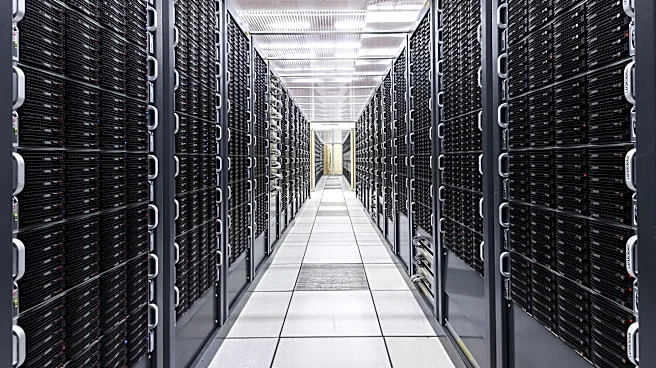
Southeast Asian countries are increasingly implementing restrictions on data center construction due to concerns over resource strain, particularly water and electricity, and broader economic slowdowns. Thailand, for instance, has paused 166 data center projects,
including suspending construction on 49 sites and freezing applications for another 117, as of September 2026. This decision was prompted by a government commission identifying oversight gaps in energy consumption, water usage, and environmental risks, with data scattered across 16 agencies. Officials are now tasked with developing unified standards for siting, safety, resource use, and economic benefits. Similarly, Indonesia has seen protests in Batam due to severe water outages, with residents linking these to the proliferation of data centers, although local officials attribute the water crisis to weather and climate factors. In West Java, construction of a 640 MW AI complex by Singapore's BDx Data Centers was halted due to incomplete permits and environmental impact assessments. Malaysia's Johor state, a major AI infrastructure hub, has also seen its data centers account for a significant portion of electricity demand, leading to calls for upgrades in transmission infrastructure and delays in water-cooled facility expansions. The region's data center boom is largely driven by a tenfold surge in AI use, which is exacerbating these resource pressures.
Why It's Important?
The restrictions on data center construction in Southeast Asia carry significant implications for the global technology industry, particularly for companies reliant on expanding computing infrastructure for AI development. The region has become a primary destination for investment in computing infrastructure, accounting for approximately 50% of data center capacity under construction in the Asia-Pacific. These new regulations introduce uncertainty for technology companies that have invested billions in the region, potentially delaying the deployment of critical AI infrastructure. The increased scrutiny on resource consumption, especially water and electricity, highlights a growing global challenge where the rapid expansion of digital infrastructure clashes with environmental sustainability and local resource availability. This could lead to higher operational costs for data center operators as they are forced to invest in more efficient cooling systems, water reuse technologies, and potentially face higher tariffs for energy consumption. For the U.S., this could impact the global supply chain for AI development and deployment, as many American tech giants rely on international data center capacity. The situation also underscores the need for more sustainable and resource-efficient data center designs and operations worldwide.
What's Next?
In response to the growing resource strain, Southeast Asian governments are expected to develop and implement more stringent regulations and unified standards for data center operations. Thailand's temporary pause is intended to allow authorities to establish clear guidelines for energy consumption, water use, and environmental impact. This could involve new policies requiring data centers to adopt advanced cooling systems, utilize treated wastewater, or even desalinate seawater for their operations, as seen in Batam, Indonesia. Energy ministers, such as Thailand's Akanat Promphan, are advocating for placing data centers in a separate consumer category with higher electricity tariffs to reflect their significant power demands. Industry players are likely to accelerate investments in on-site renewable energy generation and advanced cooling technologies to meet these evolving standards and reduce their reliance on local grids and water supplies. However, this regulatory uncertainty could also prompt some companies to reconsider future investments in the region or explore alternative locations with more stable regulatory environments and resource availability. The ASEAN Summit, where leaders will address pressing economic priorities, may also see discussions on regional cooperation for sustainable infrastructure development.
Beyond the Headlines
The current situation in Southeast Asia points to a deeper, global reckoning with the environmental footprint of the artificial intelligence boom. Beyond immediate resource constraints, the ethical and societal implications of massive data center expansion are coming to the forefront. The protests in Indonesia highlight the tension between economic development driven by foreign investment and the immediate quality of life for local communities, particularly concerning access to essential resources like water. This raises questions about equitable resource distribution and the social license to operate for large tech companies. Furthermore, the push for unified standards and stricter oversight could set a precedent for other emerging markets grappling with similar challenges, potentially leading to a global shift towards more regulated and sustainable digital infrastructure development. The long-term impact could include a re-evaluation of where data centers are located, favoring regions with abundant renewable energy and water resources, or driving innovation in truly closed-loop and zero-emission data center technologies. This also brings into focus the broader debate on whether the economic benefits of AI infrastructure development justify the environmental and social costs, prompting a re-evaluation of national development priorities.