





What's Happening?
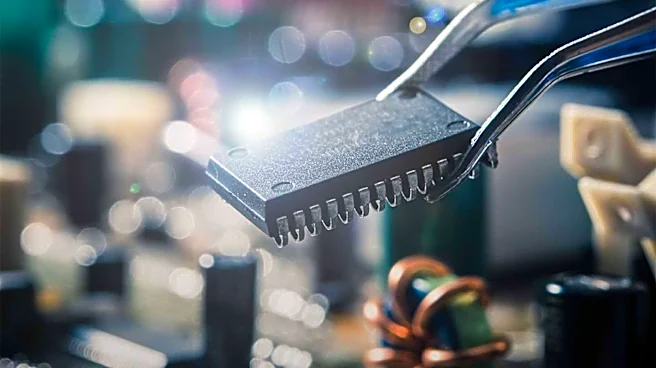
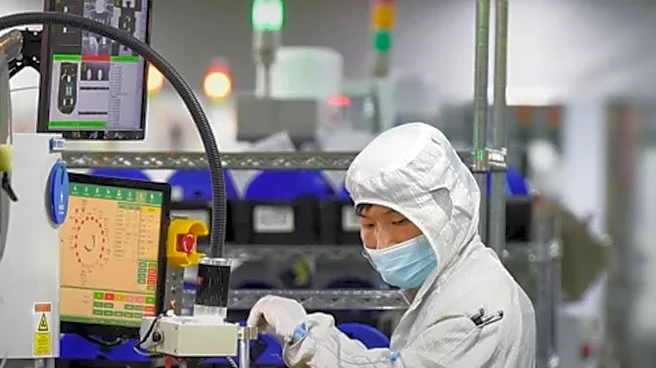
Marvell and GlobalFoundries have announced an expanded partnership to increase the production of silicon germanium (SiGe) wafers at GlobalFoundries' Burlington, Vermont plant. This collaboration aims to meet the growing demand for optical transceivers
and laser modules essential for AI data center networking. SiGe is a key material in optical transceivers, which convert electrical signals into light and vice versa, and in laser modules used in switches from companies like Nvidia. The increased capacity will support near-packaged optics (NPO), co-packaged optics (CPO), and next-generation pluggable transceivers. GlobalFoundries has validated its SiGe process to 200 Gbps per lane, enabling 1.6 Tbps transceivers, with a roadmap to achieve 3.2 Tbps as lane speeds further increase. This move is driven by the physical limitations of copper interconnects, which struggle to carry usable signals beyond 1.25 meters at 400 Gbps per lane, making optical solutions critical for high-speed AI infrastructure.
Why It's Important?
This expanded partnership is crucial for the advancement of AI infrastructure, as it addresses the fundamental physical limitations of traditional copper cabling in high-speed data transmission. The shift from copper to optical interconnects is essential for maintaining efficient communication between GPUs in AI data centers, preventing latency bottlenecks, and managing heat generation. By boosting SiGe wafer production, Marvell and GlobalFoundries are directly supporting the development of next-generation optical transceivers that can handle the immense bandwidth requirements of complex AI models. This transition impacts the entire AI ecosystem, from chip manufacturers to data center operators, by enabling more scalable and power-efficient networking solutions. The investment also highlights the strategic importance of domestic manufacturing capabilities, with GlobalFoundries' silicon photonics push being backed by a $300 million US government package under the CHIPS Act, underscoring national efforts to secure critical technology supply chains.
What's Next?
The increased production of SiGe wafers is expected to facilitate the broader adoption of 1.6 Tbps transceivers in AI data centers, with a clear path towards 3.2 Tbps solutions. Marvell is also developing coherent optics for long-haul networking, with its Colorz 1600 coherent product (a 1.6 Tb/s solution) expected to sample later in 2026, aimed at inter-data-center connectivity. This indicates a future where optical interconnects will not only dominate within data centers but also connect them across vast distances. The collaboration between Marvell and Nvidia, which explicitly includes silicon photonics tied into NVLink Fusion, suggests a deeper integration of optical technology into proprietary AI hardware ecosystems. Data center operators and procurement teams will need to carefully evaluate vendor roadmaps and distinguish between open-standard merchant optics and proprietary integrated solutions to manage vendor lock-in risks and ensure future upgrade flexibility.
Beyond the Headlines
This development signifies a fundamental shift in the underlying architecture of high-performance computing, moving beyond incremental improvements in electrical signaling to a photonics-centric approach. The reliance on specialized optical components like indium phosphide lasers and electro-absorption modulated lasers highlights the increasing complexity and capital intensity of manufacturing these critical parts. The concentration of US industrial policy and capital around a few key suppliers, such as Lumentum and Coherent (which have received significant investments from Nvidia), raises questions about supply chain resilience and potential pricing risks for buyers. Furthermore, the move towards co-packaged optics (CPO) and near-packaged optics (NPO) represents a deeper integration of optical components directly into chip packages, which could lead to significant advancements in power efficiency and density, but also potentially create new challenges in terms of design, manufacturing, and thermal management.