






What's Happening?
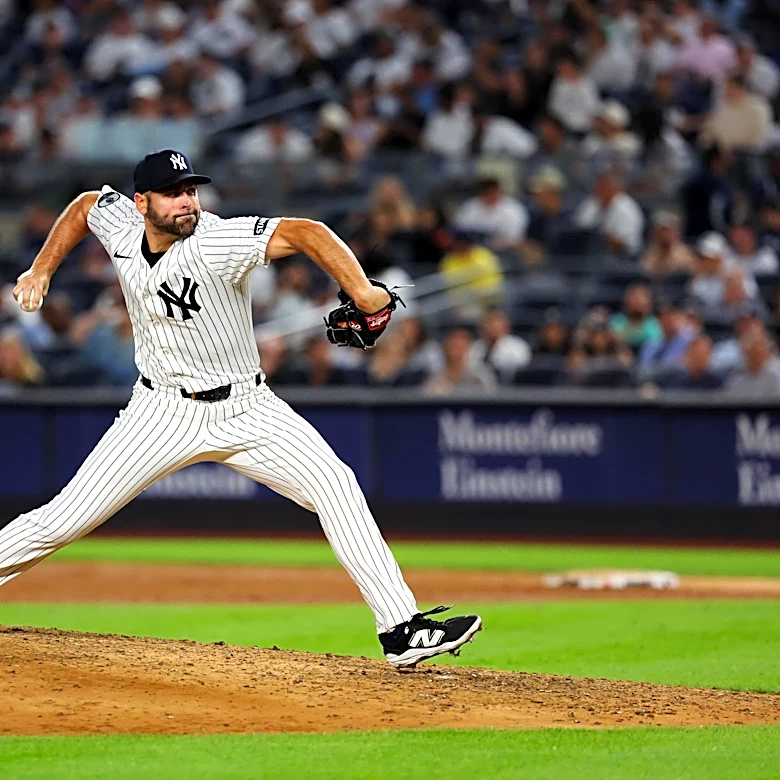
Philadelphia Phillies pitcher Zack Wheeler has been working to regain his top form after a significant dip in performance following the All-Star break. Despite a season ERA of 3.31 in 23 starts, Wheeler recorded an 8.51 ERA over six starts post-All-Star
break, including a challenging outing in Seattle where he allowed eight runs in four innings. Recent analysis of his biomechanics revealed that he was holding his glove two inches lower than usual, causing an over-rotation in his delivery and an improper follow-through. This mechanical flaw was identified and corrected, leading to an improved performance in his last start against the Los Angeles Angels, where he allowed only one run in six innings. However, his ERA in the last seven starts has climbed to 7.12, indicating ongoing efforts to fully resolve the issues. The Phillies are relying on Wheeler to return to his ace-level performance as they push for a fifth consecutive postseason appearance.
Why It's Important?
Zack Wheeler's performance is crucial for the Philadelphia Phillies, especially as they enter a pivotal series against the Atlanta Braves and aim for a postseason berth. His struggles post-All-Star break have impacted the team's pitching consistency, making his return to form a significant factor in their playoff aspirations. The biomechanical adjustments highlight the intricate details that can affect a professional athlete's performance and the importance of specialized analysis in sports. If Wheeler can consistently pitch at his previous high level, it would solidify the Phillies' rotation, providing a formidable trio alongside Cristopher Sánchez and Jesús Luzardo. This would significantly boost their chances in high-stakes games, potentially influencing their standing in the NL East and their overall playoff run. Conversely, continued struggles could place added pressure on other pitchers and the bullpen, potentially jeopardizing their postseason hopes.
What's Next?
Zack Wheeler is scheduled to start on Saturday night against the Atlanta Braves, a critical game that will test the effectiveness of his recent biomechanical adjustments. This start is viewed as one of his most important of the year, offering a chance to prove he is back on track. The Phillies are hopeful that his improved outing against the Angels was a 'confidence builder' and a sign of consistent performance to come. The team's manager, Don Mattingly, expressed confidence that the adjustments were minor but impactful, providing a foundation for Wheeler for the remainder of the season. His performance in this upcoming series will be closely watched, as it could dictate the Phillies' momentum and their strategic approach for the final stretch of the regular season and into potential playoff contention.
Beyond the Headlines
The detailed biomechanical analysis undertaken by the Phillies' pitching staff underscores the increasing reliance on advanced sports science in professional baseball. This approach goes beyond traditional coaching methods, utilizing technology to pinpoint subtle mechanical inefficiencies that can significantly impact a pitcher's effectiveness and potentially lead to injuries. The focus on a two-inch lower glove position highlights the minute adjustments that can differentiate elite performance from a slump. This trend reflects a broader shift in professional sports towards data-driven insights and personalized athlete development, aiming to optimize performance and extend careers. For players like Wheeler, understanding and correcting these nuances can be the key to maintaining a competitive edge and contributing to team success in a highly demanding environment.