
What's Happening?
USA striker Folarin Balogun's World Cup suspension was controversially overturned following intervention by President Trump. Balogun, who plays for Monaco, received a red card during the United States'
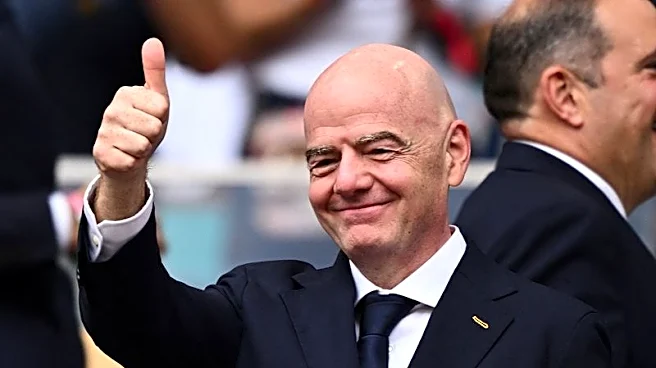
round-of-32 match against Bosnia and Herzegovina. However, FIFA's disciplinary committee decided to suspend the one-match ban for a year, allowing him to play in the subsequent match against Belgium. President Trump admitted to discussing the red card with FIFA President Gianni Infantino, which has led to significant debate. Human rights group FairSquare has filed a complaint with the International Olympic Committee, alleging that Infantino breached rules on political neutrality. The decision has been criticized by various stakeholders, including the Norwegian football federation and members of the European Parliament.
Why It's Important?
The intervention by President Trump in FIFA's disciplinary process raises questions about political influence in sports governance. The decision to suspend Balogun's ban has sparked a debate on the integrity of FIFA's disciplinary actions and the potential for political figures to sway decisions. This incident could impact the perception of fairness in international sports competitions and the role of political leaders in influencing sports outcomes. The controversy also highlights the challenges faced by organizations like FIFA in maintaining neutrality and transparency, especially when high-profile figures are involved. The outcome of this situation could set a precedent for future cases where political intervention is suspected.
What's Next?
The complaint filed by FairSquare with the IOC could lead to further investigations into FIFA's handling of the Balogun case. If the IOC finds evidence of breaches in political neutrality, it may result in sanctions or policy changes within FIFA. Additionally, the ongoing scrutiny from European Parliament members and other football federations may pressure FIFA to clarify its disciplinary processes and ensure they are free from external influence. The situation may also prompt discussions within the sports community about the need for reforms to protect the integrity of sports governance from political interference.