





What's Happening?
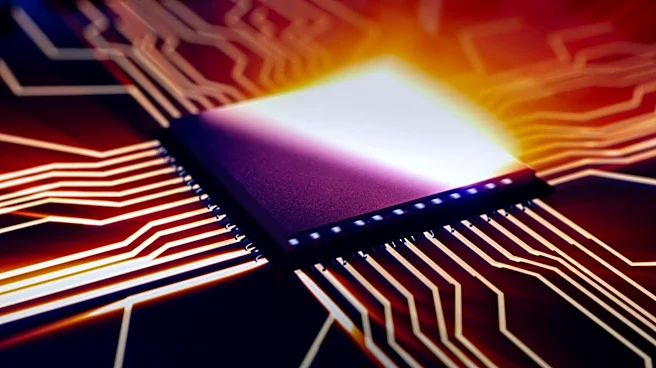
Cambricon Technologies, a Chinese developer of AI accelerators, is gaining prominence as China intensifies its efforts to build a self-sufficient domestic AI and semiconductor industry. This push is largely a response to increasing restrictions on Western
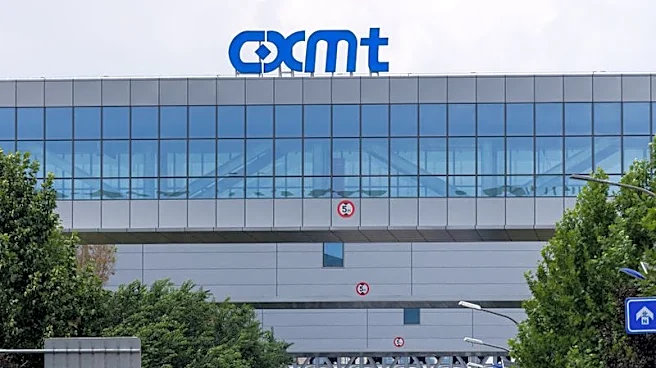
technology. Pacific Horizon Investment Trst PLC highlighted Cambricon's strategic importance in its investment reports, noting the company as 'China's answer to NVIDIA' and a leading domestic AI accelerator developer. Cambricon Technologies is also a significant holding in the Global X China Semiconductor ETF. The broader initiative in China involves several other companies, including Alibaba, Huawei, Enflame, Moore Threads, MetaX, and Iluvatar CoreX, all working to develop alternatives to foreign AI chips. This collective effort underscores a national strategic imperative to reduce reliance on external technology and foster indigenous innovation in the critical AI and semiconductor sectors.
Why It's Important?
The rise of companies like Cambricon Technologies is crucial for the U.S. as it signifies China's accelerating progress towards technological independence in AI and semiconductors. This development could impact the global technology landscape, potentially altering supply chains and market dynamics. For U.S. semiconductor manufacturers and AI technology providers, a self-sufficient China could mean reduced market access and increased competition from domestic Chinese alternatives. The strategic imperative for China to achieve self-reliance, driven by Western technology restrictions, highlights a broader geopolitical and economic decoupling trend. This could lead to a bifurcated global technology ecosystem, where U.S. companies might face challenges in maintaining their dominant positions in key markets, while also spurring further innovation and investment in domestic U.S. semiconductor and AI capabilities to maintain a competitive edge.
What's Next?
In the near term, China is expected to continue investing heavily in domestic AI and semiconductor research and development, further bolstering companies like Cambricon Technologies. This will likely involve increased government subsidies, preferential policies, and strategic partnerships within China to accelerate technological breakthroughs and market penetration. U.S. policymakers and industry leaders will likely monitor these developments closely, potentially leading to further adjustments in trade policies, export controls, and investment strategies to safeguard U.S. technological leadership. The ongoing competition could also drive a global race for AI talent and intellectual property, with both the U.S. and China vying for dominance in critical emerging technologies. Companies in both nations will likely focus on enhancing their R&D capabilities and securing their supply chains to navigate this evolving technological landscape.
Beyond the Headlines
The emergence of Cambricon Technologies and China's broader drive for AI and semiconductor self-sufficiency extends beyond immediate economic and technological competition. It reflects a fundamental shift in global power dynamics, where technological leadership is increasingly intertwined with national security and economic sovereignty. This pursuit of self-reliance could lead to a more fragmented global technology market, potentially impacting international standards, interoperability, and collaborative research efforts. Ethically, it raises questions about the implications of distinct technological ecosystems on global innovation and the potential for divergent ethical frameworks in AI development. The long-term implications could include a re-evaluation of globalization, with nations prioritizing domestic capabilities over global interdependence in critical technological domains, thereby reshaping international relations and trade agreements.