





What's Happening?
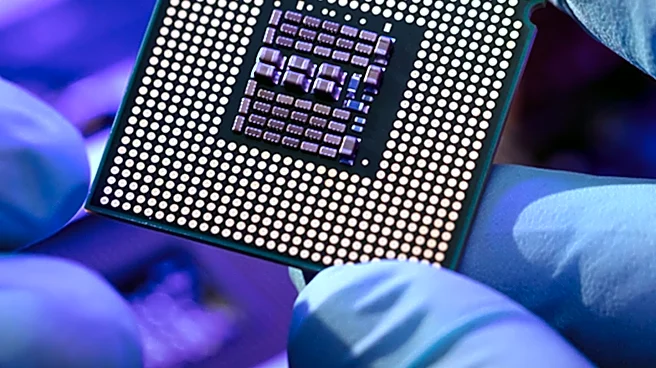
Architect Labs, a Palo Alto startup, announced that its AI system designed and verified a chip named Redwood in under two weeks. The AI system autonomously generated the register-transfer-level design, verification environments, formal mathematical proofs,
firmware, and kernels, with human architects providing only the initial specification. While the company initially claimed Redwood 'beats NVIDIA' with 3.4 times better performance per watt, a community note clarified that this figure is a simulation-based projection for a future fabricated chip, and the current design runs on an FPGA board, which is slower than NVIDIA's Jetson. Despite the clarification, the achievement marks a significant milestone: an AI system successfully carried a chip from specification to a verified, working design running real models, with the most challenging aspect, verification, handled autonomously.
Why It's Important?
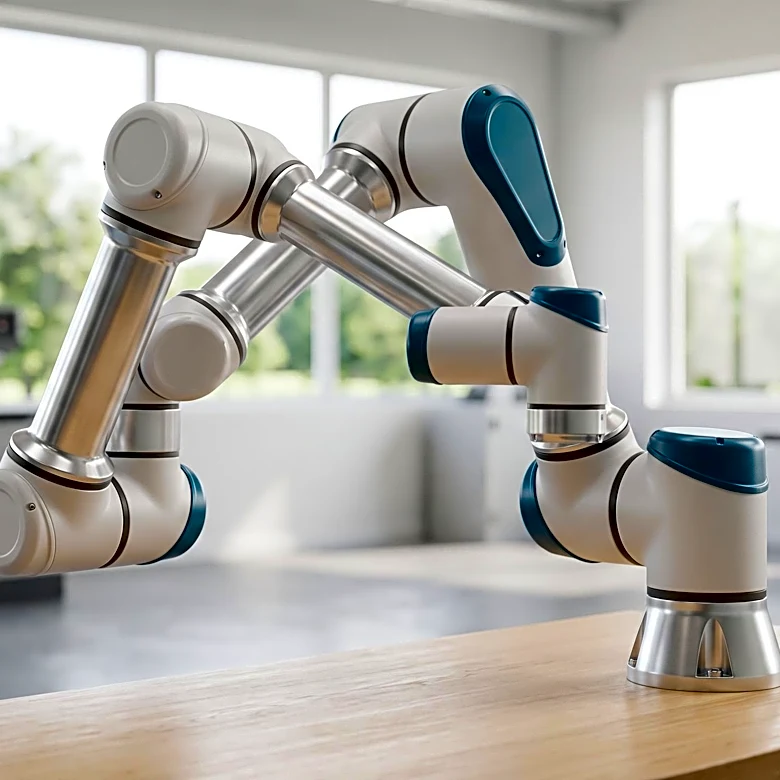
This development signifies a potential paradigm shift in the semiconductor industry, where AI could dramatically reduce the cost and time associated with chip design and verification. Traditionally, chip design is an expensive and error-intolerant discipline, with verification consuming over half of a project's effort. If AI systems can reliably produce first-pass-correct hardware in weeks, it could collapse the cost of custom silicon, making tailored chips accessible to a wider range of companies beyond tech giants. This is particularly important as AI workloads expand beyond data centers into devices like robots, drones, cameras, and sensors, which require low-power chips matched to specific models. The ability to rapidly iterate and verify designs could accelerate innovation across various industries reliant on specialized hardware.
What's Next?
Architect Labs plans to 'tape out' multiple Redwood families on TSMC for different use cases, which means they will commit to manufacturing the physical chips. This will be the true test of the AI-designed chip, as fabrication exposes physical effects that simulations cannot fully capture. The industry will be closely watching for independent benchmarks once physical chips exist to validate the projected performance numbers. If successful, this could lead to a future where AI designs better hardware, which in turn trains and serves better AI, creating a recursive loop of self-improvement. This also poses a potential disruption to the electronic design automation (EDA) industry, as AI-driven automation of verification could reduce the need for expensive human-intensive tools.
Beyond the Headlines
The Redwood story highlights the growing capability of AI to move 'down the stack,' from writing software to shaping the physical machinery it runs on. This raises profound questions about the future of engineering and design, where human roles might shift from direct execution to defining specifications and critically evaluating AI-generated outputs. The ability of AI to explore hundreds of candidate microarchitectures in parallel, sometimes discovering unintuitive but optimal solutions, suggests a new era of design innovation. Ethically, it prompts discussions about the accountability and reliability of AI-generated hardware, especially in critical applications. Culturally, it challenges traditional notions of human creativity and expertise in highly specialized fields like chip architecture, pushing the boundaries of what AI can achieve.