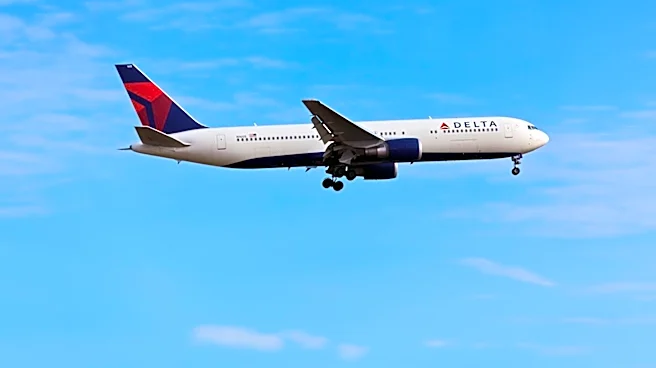








What's Happening?
U.S. District Judge Ramon Reyes has denied Delta Air Lines' request to dismiss a class-action lawsuit concerning 'window seats' that lack windows. The lawsuit was filed by four passengers who claim they paid for window seats on Boeing and Airbus planes
but were seated next to windowless walls. The plaintiffs argue that Delta did not disclose the absence of windows when they booked their flights. The suit seeks millions of dollars in damages for over one million passengers. Delta Air Lines, based in Atlanta, had contended that the nature of airline operations should exempt it from guaranteeing specific seat assignments, citing its 'contract of carriage' which states that the airline 'does not offer tickets or contracts to customers that guarantee particular seats.' However, Judge Reyes ruled that there is a 'reasonable dispute' over whether this contract actually requires the airline to provide window seats to passengers who paid for them. This ruling does not decide the merits of the lawsuit but allows the case to proceed.
Why It's Important?
This ruling is significant for consumer rights within the airline industry, particularly regarding the transparency of services offered versus services delivered. If the lawsuit is successful, it could set a precedent requiring airlines to be more explicit about seat characteristics, especially for features like windows that passengers might reasonably expect when booking a 'window seat.' This could impact how airlines market and sell specific seat types, potentially leading to clearer disclosures during the booking process. For Delta Air Lines and other carriers, a loss in this case could result in substantial financial penalties, given the claim for millions of dollars in damages for over a million passengers. It also highlights the increasing scrutiny on airline contracts of carriage and whether their terms adequately protect consumer expectations. The outcome could influence industry-wide practices, potentially leading to changes in how airlines manage and communicate seat assignments to avoid similar legal challenges.
What's Next?
The class-action lawsuit against Delta Air Lines will now proceed, moving beyond the initial dismissal request. This means both sides will likely engage in discovery, gathering evidence and testimonies to support their claims. The plaintiffs will aim to demonstrate that passengers were misled and did not receive the service they paid for, while Delta will continue to argue that its contract of carriage absolves it of responsibility for specific seat guarantees. The case could eventually go to trial, or the parties might seek a settlement. The outcome could influence future legal challenges against other airlines facing similar complaints, especially given that a federal judge in San Francisco previously denied a similar motion from United Airlines in a comparable lawsuit. The aviation industry will be closely watching this case, as it could lead to new regulations or industry standards regarding seat descriptions and passenger expectations.
Beyond the Headlines
The lawsuit touches upon broader ethical and consumer protection issues within the travel industry. It raises questions about the implicit expectations consumers have when purchasing services, even when fine print might suggest otherwise. The concept of a 'window seat' inherently implies the presence of a window, and the absence of one can be seen as a breach of that implicit understanding, regardless of contractual disclaimers. This case could prompt a re-evaluation of how companies communicate product features, especially when those features are commonly understood but not explicitly guaranteed. It also highlights the power of collective action through class-action lawsuits to hold large corporations accountable for perceived discrepancies between advertised services and actual delivery. The ruling could encourage greater transparency across various service industries, pushing companies to align their marketing with the tangible experience provided to customers.