






What's Happening?
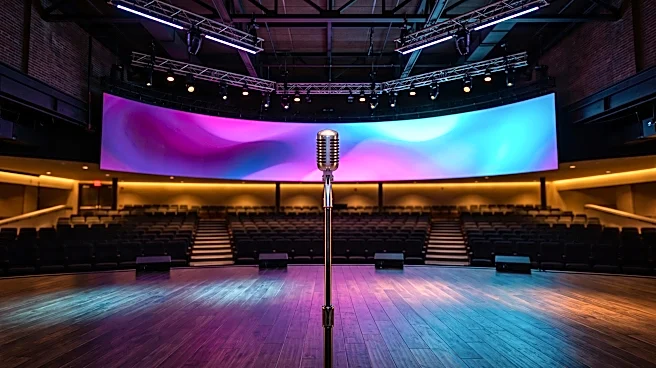
Apple Music has introduced a new logo for its audio streaming service, moving away from its previous minimalist design. This change coincides with the launch of Apple Music Hall, a new intimate music venue located in London's Battersea Power Station.
The venue, with a capacity of 600, aims to bridge the gap between intimacy and production value in live music performances. The new Apple Music wordmark featured on the venue's website adopts a bold, lowercase design, departing from the clean San Francisco font previously used. This design shift has been noted by observers as having a retro, Y2K aesthetic, with some comparing it to fonts found on music magazine covers or cassette inserts. Apple Music originally launched in 2015, and this design update marks a significant visual change for the brand.
Why It's Important?
This design overhaul by Apple Music is significant as Apple's design choices often influence broader industry trends. Historically, Apple has been a trendsetter, notably shifting away from skeuomorphism with iOS 7 in 2013 and more recently with its 'Liquid Glass' aesthetic. The move towards a bolder, more maximalist design for Apple Music could indicate a broader shift in Apple's overall design philosophy and potentially impact design trends across various sectors. For the music industry, the establishment of Apple Music Hall signifies Apple's deeper engagement with live music, potentially offering new platforms for artists and unique experiences for fans. This could also influence how other streaming services or tech companies approach physical spaces and live events, further integrating digital and physical music consumption.
What's Next?
The introduction of the new logo and the Apple Music Hall suggests a potential re-evaluation of Apple's brand identity and its approach to user engagement. It is likely that this new design aesthetic will gradually be integrated across other Apple Music platforms and potentially other Apple services, influencing future product designs and marketing campaigns. The Apple Music Hall in London will serve as a physical touchpoint for the brand, and its success could lead to similar ventures in other key markets, expanding Apple's footprint in the live entertainment sector. The industry will be watching to see if this design shift is an isolated change for Apple Music or a precursor to a broader design evolution across the Apple ecosystem, potentially impacting how digital brands present themselves visually.
Beyond the Headlines
The shift from minimalism to a bolder, more retro design for Apple Music could reflect a broader cultural trend away from sleek, understated aesthetics towards more expressive and nostalgic visual identities. This move by a major tech company like Apple can legitimize and accelerate such trends in design, influencing everything from app interfaces to product packaging. Ethically, the creation of a dedicated music venue by a tech giant like Apple raises questions about the evolving relationship between technology companies and traditional cultural institutions. It could lead to increased competition for smaller venues or, conversely, provide new opportunities for artists and audiences through enhanced production values and global reach. This development highlights the ongoing convergence of technology, entertainment, and physical spaces, blurring the lines between digital consumption and real-world experiences.