






What's Happening?
India has emerged as Russia's largest source of imported oil products, supplying nearly 70% of Russia's total oil product imports in August. This surge, amounting to approximately 172,000 tonnes, marks a significant increase, more than seven times Russia's previous
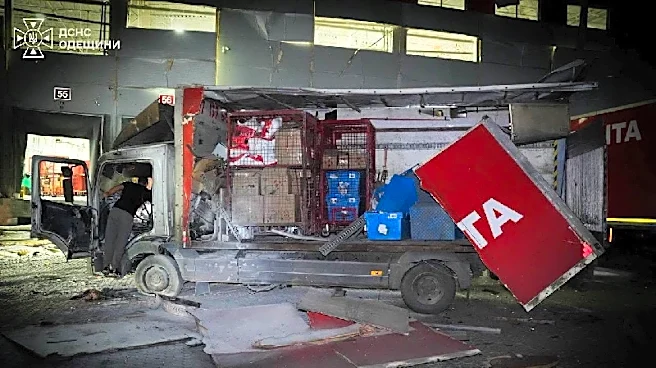
monthly record. According to an analysis by the Centre for Research on Energy and Clean Air (CREA), about 120,000 tonnes of these shipments were gasoline, valued at around 78 million euros. The fuel was loaded at Gujarat’s Vadinar refinery and supplied by Nayara Energy to Russia’s state-controlled Rosneft. This development follows a sustained campaign of Ukrainian drone attacks targeting Russian oil refineries and energy infrastructure, which has severely disrupted Russia’s domestic fuel production capacity and led to fuel shortages. Consequently, Russia's own oil-product exports have sharply declined, with seaborne shipments falling 21% by volume in August, and daily revenues from product exports dropping 32% from July, reaching their lowest level since the full-scale invasion of Ukraine.
Why It's Important?
This shift in trade dynamics highlights the significant impact of geopolitical conflicts on global energy markets and supply chains. The reliance of Russia, a major oil producer, on imported refined products from India underscores the effectiveness of Ukrainian long-range strikes and Western sanctions in disrupting Russia's energy sector. This unusual trade flow, where Russian crude is processed in India and then shipped back to Russia as refined products, demonstrates how nations adapt to maintain energy security amidst conflict and sanctions. For India, this presents an economic opportunity, strengthening its position as a key player in global energy refining and trade. However, it also raises questions about the indirect support for Russia's economy, as Rosneft, a sanctioned entity, is involved in the transactions. The situation also indicates potential vulnerabilities in Russia's domestic infrastructure, forcing it to seek external solutions for essential fuel supplies.
What's Next?
The ongoing Ukrainian long-range strike campaign against Russian oil infrastructure is expected to continue, potentially further exacerbating Russia's domestic refining capacity issues and increasing its reliance on imported refined products. Russia may explore additional measures to protect its refineries, such as the reported use of shipping containers for defense. The continuation of this trade flow between India and Russia will likely remain under international scrutiny, particularly concerning the involvement of sanctioned entities like Rosneft. As global oil prices remain volatile, Russia's energy earnings could still be supported by higher crude prices, despite reduced export volumes of refined products. The situation could also prompt Russia to seek alternative sources for refined fuels or invest more heavily in defensive measures for its energy infrastructure to mitigate future disruptions.
Beyond the Headlines
This development reveals a complex interplay of economic necessity, geopolitical strategy, and the unintended consequences of conflict. The circular trade route—Russian crude to India for refining, then back to Russia as fuel—illustrates the adaptability of global energy markets but also highlights the challenges of enforcing sanctions effectively when alternative trade routes emerge. Ethically, it raises questions for countries like India about engaging in trade that indirectly supports a nation under international sanctions, even if legally permissible. This scenario could also set a precedent for how countries navigate energy security in future conflicts, potentially leading to more diversified and complex global supply chains. The long-term implications could include a re-evaluation of energy infrastructure resilience and the strategic importance of refining capabilities in national security contexts.