


What's Happening?
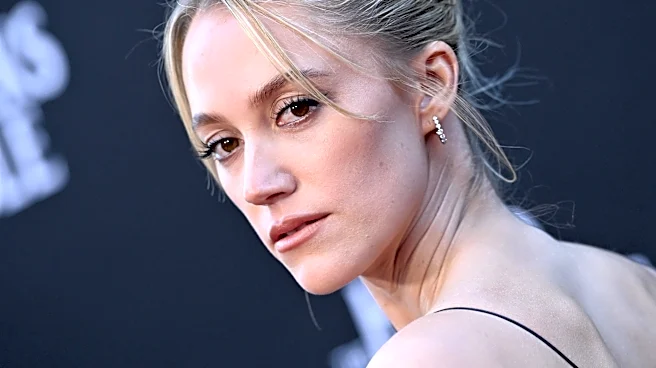
Author Virginia Feito's 2025 novel, 'Victorian Psycho,' has been adapted into a film, with Feito herself penning the screenplay. The film, which began production in the summer of 2025 with Maika Monroe in the starring role, marks a significant transition
from page to screen for Feito's work. Initially, A24 and Margaret Qualley were attached to the project, but the deal fell through. Feito, who previously had her first novel, 'Mrs. March,' optioned for a movie, was asked by director Zachary Wigon to adapt 'Victorian Psycho' after he saw its cinematic potential in an early draft. The adaptation process involved several key changes from the novel, including altering the climactic bloodbath from Christmas to summer due to practical production constraints and budget limitations. Additionally, Feito streamlined the narrative by reducing voiceover, eliminating the novel's flashback structure to focus on the present, and removing certain backstory details to create a 'fever dream' viewing experience. Feito views the film as a 'translation' of her novel, acknowledging that some elements are inevitably lost while others are unexpectedly enhanced by the visual medium.
Why It's Important?
This adaptation underscores the complex relationship between literature and film, particularly when an author adapts their own work. Feito's experience highlights the practical and artistic compromises often necessary in translating a novel's intricate narrative and internal monologues into a visual format. The decision to streamline plot points and alter timelines for cinematic impact demonstrates the distinct demands of screenwriting, which prioritizes external action and immediate viewer experience over detailed internal exposition. The shift in casting and production companies also reflects the dynamic and often unpredictable nature of film development. For audiences, it offers a case study in how a creator reinterprets their own story for a different medium, potentially offering new perspectives on familiar characters and themes. For the publishing and film industries, it showcases the continued synergy between successful literary works and their potential for broader reach through cinematic adaptations, while also illustrating the creative control authors can maintain in such processes.
What's Next?
The film adaptation of 'Victorian Psycho' is expected to be released, offering audiences a visual interpretation of Feito's psychological thriller. The reception of the film will likely influence future adaptations of her work and potentially other authors who consider adapting their own novels. The creative choices made by Feito, such as reducing voiceover and altering narrative structure, will be subject to critical and audience evaluation, contributing to ongoing discussions about the fidelity and artistic license in literary adaptations. The success of Maika Monroe's portrayal of Winifred Notty, described by Feito as both warmer and more frightening than the novel's character, will also be a key point of interest. This project could further establish Feito as a versatile creator capable of navigating both literary and cinematic storytelling, potentially opening doors for her to write original screenplays or adapt other works.
Beyond the Headlines
Feito's approach to adapting her novel as a 'translation' rather than a direct replication offers a deeper insight into the nature of storytelling across different mediums. Her perspective that 'some things will inevitably be lost, but there will be other things that are unexpectedly great' challenges the notion that film adaptations must be strictly faithful to their source material. This philosophy encourages a more fluid and creative interpretation, recognizing the unique strengths of visual storytelling. The practical constraints, such as budget and actor availability, that influenced significant plot changes (like the season of the climactic event) also highlight the often-unseen forces that shape artistic output in commercial productions. Furthermore, Feito's admiration for how films can create the illusion of explicit content without actually showing it, as she noted with 'The Texas Chain Saw Massacre,' speaks to the psychological power of cinema and its ability to manipulate perception, adding another layer to the discussion of artistic impact and audience engagement.