








What's Happening?
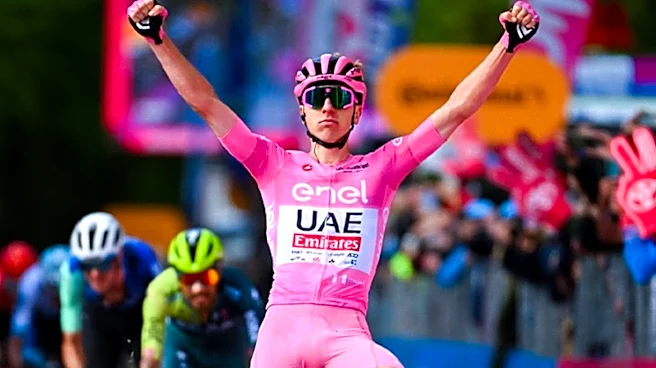
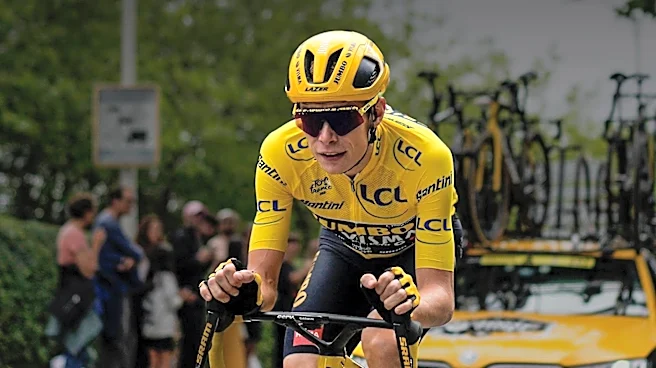
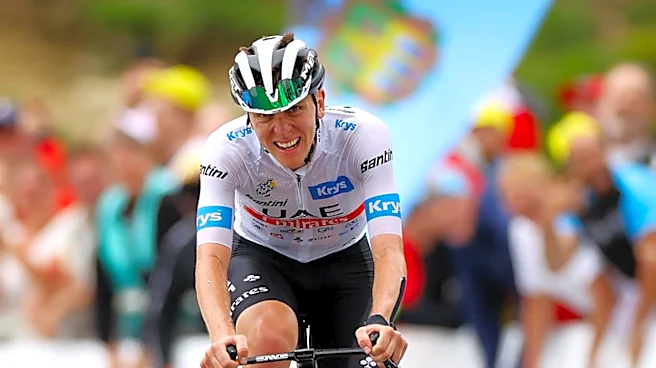
During Stage 6 of the Tour de France, Tadej Pogačar, a prominent cyclist, secured the yellow jersey after a decisive performance on the Col du Tourmalet. Behind-the-scenes footage captured Pogačar discussing the race with his teammate Isaac del Toro.
The conversation revealed Pogačar's strategic insights and his expectations from Del Toro, who played a crucial role in the final acceleration that led to Pogačar's victory. The footage highlighted a mentor-apprentice dynamic, with Pogačar providing feedback to Del Toro, emphasizing the importance of pacing. The exchange also touched on their main rival, Jonas Vingegaard, who was unable to keep up with their pace.
Why It's Important?
This footage provides a rare glimpse into the strategic planning and execution that goes into winning a stage at the Tour de France. Pogačar's ability to communicate effectively with his team and adapt strategies in real-time is crucial for maintaining his lead in the race. The insights into team dynamics and decision-making processes are valuable for understanding how top cyclists like Pogačar maintain their competitive edge. This also highlights the importance of teamwork and the role of supporting riders like Del Toro in achieving individual success in cycling.
What's Next?
As the Tour de France progresses, Pogačar and his team will likely continue to refine their strategies to maintain their lead. The feedback loop between Pogačar and his teammates will be crucial in adapting to the challenges posed by competitors like Vingegaard. Observers can expect further strategic maneuvers as the race intensifies, with Pogačar aiming to secure his position and potentially win the overall title.
Beyond the Headlines
The interaction between Pogačar and Del Toro underscores the mentorship role experienced athletes play in nurturing emerging talent. This dynamic is essential for the long-term success of teams in professional cycling. Additionally, the footage highlights the psychological aspects of racing, where understanding competitors' strategies and weaknesses can be as important as physical performance.