



What's Happening?
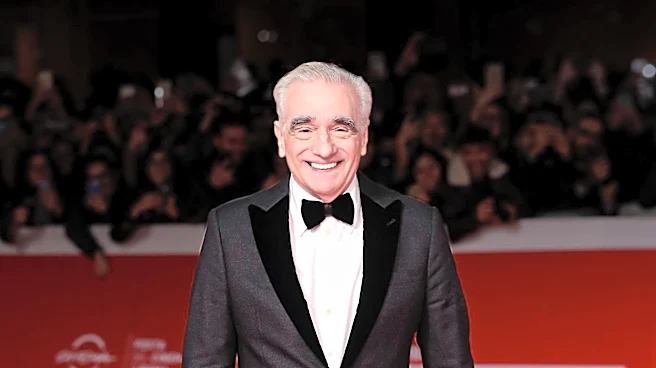
Filmmaker Martin Scorsese has stated that his planned 'Cleopatra' movie, which was set to star Angelina Jolie, was canceled due to the 2014 Sony Pictures cyberattack. This cyberattack was a direct consequence of the controversy surrounding Seth Rogen
and James Franco's film 'The Interview'. During a conversation with his daughter Francesca Scorsese, Martin Scorsese recalled that the 'Cleopatra' project had a prepared script by Eric Roth and Angelina Jolie was ready to star. He jokingly, yet pointedly, blamed Rogen for the film's failure, suggesting that the North Korean government's anger over 'The Interview' 'ruined everything.' The FBI attributed the cyberattack, which exposed private emails and company documents, to North Korea. The threats from hackers also led Sony to initially cancel the wide theatrical release of 'The Interview', though it was later made available on other platforms.
Why It's Important?
This event highlights the significant and unexpected ripple effects that geopolitical tensions and cyber warfare can have on the entertainment industry. The cancellation of a major film project, involving a director of Martin Scorsese's caliber and a star like Angelina Jolie, represents a substantial financial and creative loss for Hollywood. It underscores the vulnerability of large corporations, such as Sony Pictures, to cyberattacks and the potential for such incidents to disrupt production schedules and investment. The incident also illustrates how artistic expression, even in the form of a comedy, can provoke international incidents with far-reaching consequences beyond the intended scope of the film itself. This situation could influence how studios approach projects with potentially sensitive political themes in the future, weighing creative freedom against potential security risks and international backlash.
What's Next?
While Scorsese's 'Cleopatra' project is unlikely to be revived in its original form, the anecdote serves as a cautionary tale for the entertainment industry regarding cybersecurity and geopolitical sensitivities. Studios may continue to enhance their cybersecurity measures to protect intellectual property and sensitive information from future attacks. The incident could also lead to more cautious approaches when developing films that touch upon international political figures or events, potentially influencing script development and distribution strategies. The ongoing dialogue within Hollywood about balancing creative freedom with potential real-world repercussions is likely to persist, especially as digital threats evolve. This event also adds to the historical context of how external factors can unexpectedly derail highly anticipated film productions.
Beyond the Headlines
The deeper implications of this event extend to the intersection of art, politics, and digital security. It raises questions about the responsibility of filmmakers when creating content that might be perceived as provocative by foreign governments, and the extent to which studios should anticipate and mitigate such risks. The Sony hack demonstrated that cyberattacks are not merely data breaches but can have tangible impacts on creative output and economic ventures. Culturally, it highlights the power of media to incite strong reactions globally, even leading to state-sponsored cyber warfare. This incident also subtly underscores the fragility of large-scale creative endeavors, where years of planning and significant investment can be undone by unforeseen external forces, prompting a reevaluation of risk management in creative industries.