


What's Happening?
Zendaya has introduced '90s-inspired vintage velvet nails as a new transitional manicure trend, ideal for moving from summer to fall. Nail artist Marina Dobic created Zendaya's green velvet set, which features a rich, dimensional finish designed to emulate
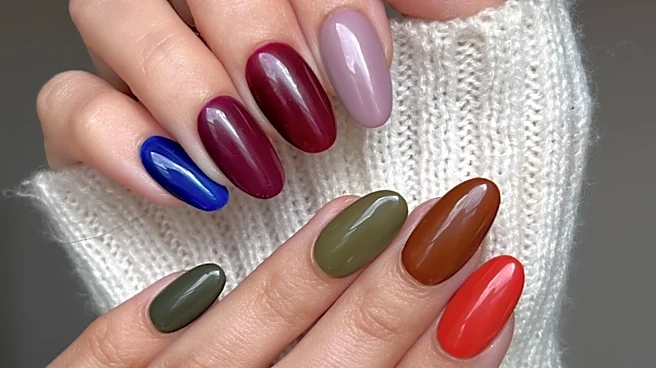
the texture of velvet without a physical fabric layer. Dobic achieved this look by using a nude base hard gel for strength, followed by a magnetic gel. A cylinder-like magnet was then used to gather the magnetic particles at the center of the nail, creating the velvet effect. The trend taps into '90s nostalgia, characterized by metallics, frosted finishes, shimmer, and jewel tones, but with a modern twist that avoids a literal throwback. Manicurists note that this style offers more depth and interest compared to subtle, clean beauty trends, making it appealing for the colder months when deeper, more atmospheric shades become relevant. The versatility of velvet nails allows for various colors, from summer-appropriate lime green to autumnal oranges and plum reds.
Why It's Important?
This emerging nail trend, popularized by a prominent figure like Zendaya, holds significance for the beauty and fashion industries. It signals a shift in consumer preferences towards more elaborate and nostalgic manicure styles, moving away from minimalist aesthetics. For nail salons and product manufacturers, this trend could drive demand for specific products, such as magnetic gels and specialized magnets, as well as a wider range of '90s-inspired polish colors. The emphasis on a 'transitional' manicure also highlights a growing consumer desire for versatile beauty choices that can adapt to changing seasons and personal styles. This trend's ability to blend vintage appeal with modern execution demonstrates how historical fashion elements can be reinterpreted for contemporary markets, influencing product development and marketing strategies. Furthermore, the endorsement by a celebrity like Zendaya often leads to widespread adoption, impacting beauty retail sales and setting new benchmarks for seasonal trends.
What's Next?
The '90s-inspired vintage velvet nail trend is expected to gain further traction as consumers seek manicure styles that offer both color and dramatic flair for the upcoming fall and winter seasons. Nail artists and beauty brands will likely respond by offering more tutorials, specialized products, and color palettes tailored to this aesthetic. Social media platforms will play a crucial role in disseminating the trend, with beauty influencers and enthusiasts showcasing their own interpretations. We may see an increase in demand for magnetic nail polishes and tools, potentially leading to innovations in application techniques and product formulations. The trend could also inspire a broader resurgence of '90s beauty and fashion elements, influencing other areas of the beauty industry, such as makeup and hair accessories. As the season progresses, expect to see a diversification of velvet nail colors, moving from brighter summer shades to deeper, richer tones more traditionally associated with autumn and winter.
Beyond the Headlines
Beyond its immediate impact on nail fashion, the resurgence of '90s-inspired trends like velvet nails reflects a broader cultural phenomenon of nostalgia. In an era of rapid change, consumers often find comfort and familiarity in revisiting past styles, which can evoke a sense of stability and continuity. This trend also highlights the cyclical nature of fashion, where elements from previous decades are continually reinterpreted and reintroduced with a contemporary twist. The 'velvet' effect, achieved through magnetic particles, showcases the intersection of technology and artistry in the beauty industry, pushing the boundaries of what can be achieved with nail design. Furthermore, the emphasis on a 'transitional' manicure speaks to a more mindful approach to beauty consumption, where choices are made to adapt to changing environments rather than being strictly seasonal. This trend, therefore, is not just about aesthetics but also about cultural memory, technological innovation, and evolving consumer psychology in the beauty landscape.