






What's Happening?
Callaway has officially cut all ties with Good Good Golf after a promotional video depicting violence against women sparked widespread backlash. The advertisement, intended to promote a co-branded driver, showed Good Good co-founder Garrett Clark pushing
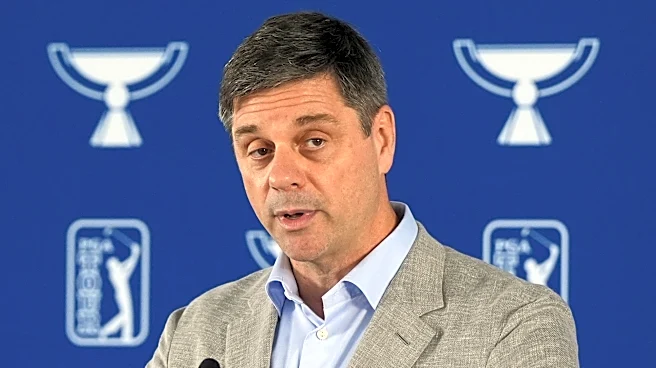
a female employee to the ground while menacingly stating, 'Do not touch my new driver.' Although the ad was quickly deleted, it drew significant criticism, leading to Dick's Sporting Goods and Costco pulling Callaway and Good Good Golf products from their shelves. Callaway issued two statements, admitting fault for approving the ad, and the PGA Tour CEO Brian Rolapp expressed disappointment in Good Good's lack of accountability. In response to the controversy, Callaway announced a $1 million donation to organizations dedicated to preventing domestic violence against women and supporting survivors.
Why It's Important?
This incident highlights the critical importance of corporate responsibility and ethical advertising practices, particularly in the digital age where content can spread rapidly and have far-reaching consequences. The swift and decisive actions taken by retailers like Dick's Sporting Goods and Costco, along with Callaway's decision to sever ties and make a substantial donation, demonstrate the power of public opinion and consumer pressure in holding companies accountable. For the sports industry, this serves as a stark reminder that partnerships and promotional content must align with broader societal values and avoid perpetuating harmful stereotypes or behaviors. The backlash also underscores the need for thorough vetting processes for all marketing materials, especially when collaborating with social media-driven entities like Good Good Golf, which has a large online following.
What's Next?
The immediate aftermath will likely involve Callaway focusing on damage control and reinforcing its commitment to social responsibility through its $1 million donation and future initiatives. Good Good Golf will face the challenge of rebuilding its brand image and regaining trust from its audience and potential partners, which may prove difficult given the severity of the controversy and the loss of a major sponsor. Other companies in the sports and entertainment sectors may review their own advertising approval processes and partnership agreements to prevent similar incidents. This event could also prompt broader discussions within the advertising industry about the ethical implications of humor and satire, particularly when it touches on sensitive social issues like domestic violence.
Beyond the Headlines
The incident reveals a deeper societal issue regarding the normalization or trivialization of violence against women, even in seemingly innocuous contexts like advertising. The attempt to spoof a psychological thriller without understanding the potential impact of depicting violence, regardless of intent, underscores a disconnect between content creators and audience perception. This event could contribute to a broader cultural shift, encouraging greater sensitivity and awareness in media portrayals of gender dynamics. It also highlights the evolving landscape of brand partnerships, where the actions of one entity can significantly impact the reputation and business of another, emphasizing the need for shared values and rigorous oversight in collaborations. The incident serves as a cautionary tale about the potential for 'new media' to misstep when not grounded in ethical considerations.