
What's Happening?
Christopher Nolan's latest film, 'The Odyssey,' adapts the ancient Greek epic into a modern cinematic experience. Known for his fascination with time, Nolan employs nonlinear storytelling to bring Homer’s
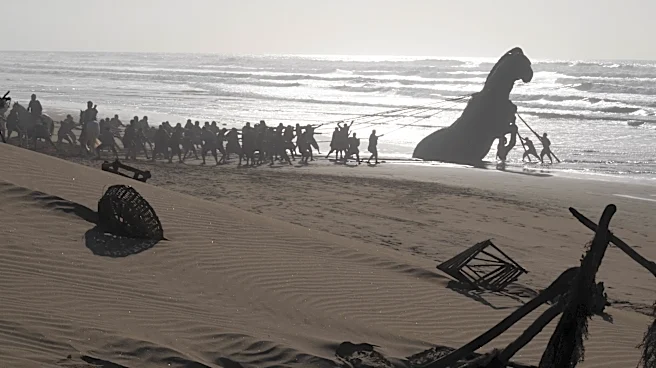
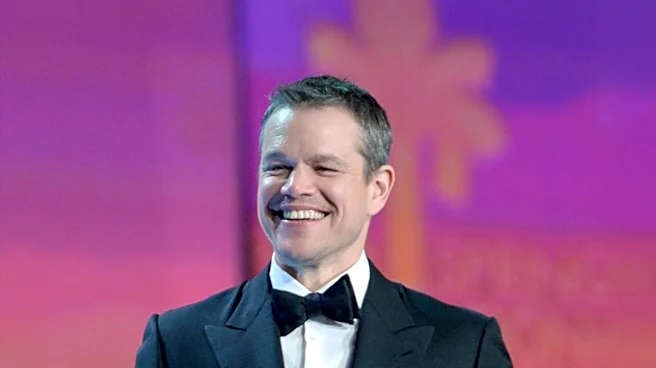
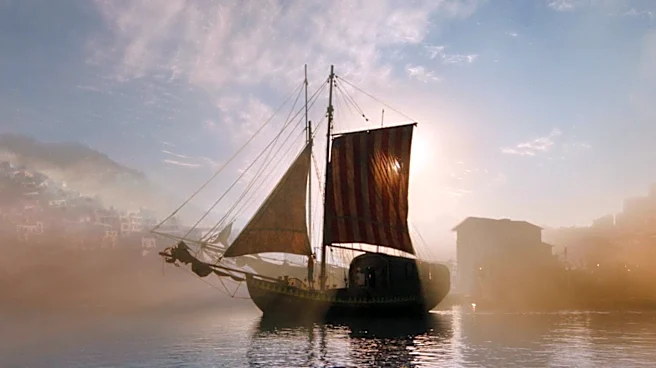
narrative to life. The film follows Odysseus, played by Matt Damon, as he navigates his return to Ithaca, encountering various trials and reflecting on his past. The movie integrates themes of memory and time, reminiscent of Nolan's previous works like 'Memento' and 'Interstellar.' The adaptation is noted for its ambitious scope, capturing the essence of the epic while infusing Nolan's unique directorial style.
Why It's Important?
Nolan's adaptation of 'The Odyssey' is significant as it bridges ancient literature with contemporary filmmaking, potentially introducing the classic to a new audience. The film's success, marked by a $264 million opening weekend, underscores Nolan's influence in the industry and his ability to draw audiences to complex narratives. This project highlights the enduring relevance of classical stories and their adaptability to modern themes, such as the human condition and the passage of time. It also reflects the film industry's ongoing interest in reimagining historical texts for today's viewers.
What's Next?
Following the film's release, discussions may arise regarding the interpretation of classical texts in modern media. Scholars and audiences alike might debate Nolan's portrayal of Odysseus and the film's thematic focus. The success of 'The Odyssey' could inspire other filmmakers to explore similar adaptations, potentially leading to a resurgence of interest in classical literature within Hollywood. Additionally, the film's reception may influence Nolan's future projects, encouraging him to continue exploring historical and literary themes through his distinctive cinematic lens.