






What's Happening?
Linus Tech Tips (LTT) has transitioned its subscription video platform, Floatplane, from rented cloud servers to a colocation facility. For nearly a decade, Floatplane operated on rented cloud infrastructure, a setup that initially proved effective by
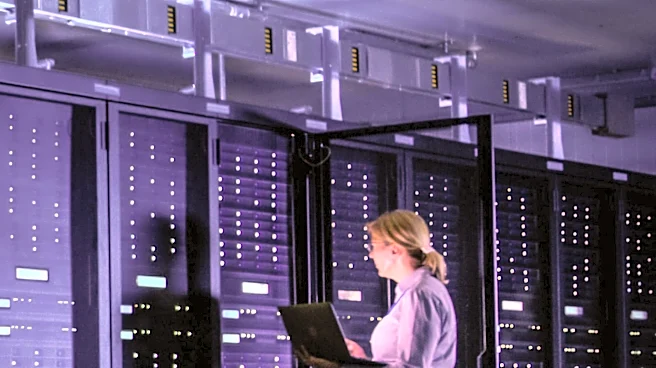
eliminating the need for upfront hardware purchases and shifting maintenance responsibilities to the cloud provider. However, this arrangement became unsustainable when their cloud host announced a significant 40% increase to their five-digit monthly bill. In response, LTT decided to move their operations. The team transported their servers to a colocation facility located near Vancouver. At this new facility, LTT rents floor space, power, cooling, and network hookups, while supplying and managing their own hardware. Their new setup includes redundant 100-gigabit switches, a multi-blade server, and two large compute nodes, each with 1.5 TB of memory. Key design choices for their new infrastructure include drawing power from two separate feeds for redundancy, a dedicated management network with cellular fallback, and direct connection to the local internet exchange to optimize traffic with major partners.
Why It's Important?
This strategic shift by Linus Tech Tips highlights a growing concern for businesses, particularly those with stable and substantial workloads: the escalating costs and potential vendor lock-in associated with cloud services. LTT's experience demonstrates that while cloud renting offers initial flexibility and reduced capital expenditure, it can lead to a loss of pricing power once a workload becomes consistent and large. This move could influence other small to mid-sized organizations, especially those heavily reliant on data processing and storage, to re-evaluate their cloud strategies. The decision to invest in owned hardware within a colocation facility suggests a long-term cost-saving measure and greater control over infrastructure. For businesses dealing with sensitive data, such as law firms or wealth advisors, the control over data location and security offered by owned infrastructure, as opposed to hosted models, becomes a critical factor, mitigating risks associated with data leaving their direct control.
What's Next?
Following this transition, Linus Tech Tips anticipates improved performance for its approximately 1,000 containers due to the upgraded server links from 25 to 100 gigabits. This move may prompt other content creators and tech-reliant businesses to conduct similar cost-benefit analyses of their cloud expenditures versus owning and managing their infrastructure. The broader industry may see an increased interest in colocation services as companies seek to balance the flexibility of cloud with the cost efficiency and control of on-premise or hybrid solutions. Furthermore, the experience of LTT could serve as a case study for firms grappling with rising AI infrastructure costs, as the principles of evaluating rental versus ownership costs apply similarly to AI workloads. Businesses will likely continue to weigh the upfront capital expenditure and operational responsibilities of owning hardware against the recurring costs and scalability of cloud services.
Beyond the Headlines
The decision by Linus Tech Tips to move away from a fully cloud-dependent model for Floatplane underscores a broader industry trend where the initial allure of cloud scalability and reduced overhead is being tempered by long-term cost implications and the desire for greater control. This shift reflects a maturing understanding of cloud economics, where 'renting' infrastructure can become more expensive than 'owning' it once usage stabilizes and scales. It also highlights the importance of infrastructure resilience, as LTT's new setup emphasizes redundancy in power and network connectivity, crucial for maintaining uptime in a demanding video streaming environment. The ethical and legal implications of data control are also brought to the forefront, particularly for industries handling sensitive client information, where the physical location and management of data can be paramount for compliance and trust. This move could signal a re-evaluation of hybrid cloud strategies, where critical, stable workloads are brought in-house or to colocation, while more dynamic or experimental workloads remain in the public cloud.