




What's Happening?
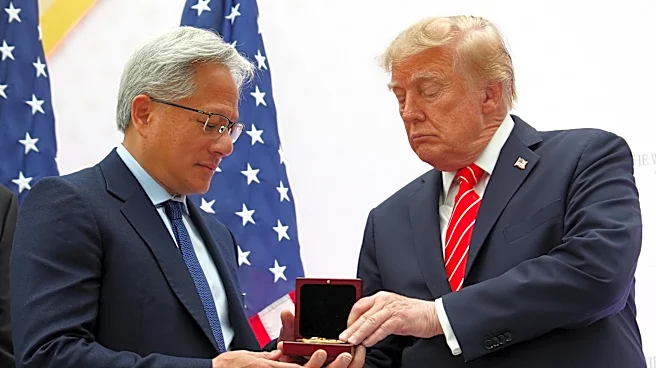
Jensen Huang, co-founder and a key architect of Nvidia's AI strategy, has resigned from his position. This departure follows U.S. national security concerns raised by an affair involving Huang. Colette Kress, Nvidia's longtime chief financial officer,
has stepped in as interim CEO. Huang's resignation has led to significant questions regarding the future of Nvidia and the broader global artificial intelligence industry, given his prominent role and influence within the company and the sector. Nvidia's shares initially fell by 15% after the announcement but later recovered. The company, a lynchpin of the AI boom, often trades with Apple as one of Wall Street’s most valuable companies and has made substantial investments in other AI firms.
Why It's Important?
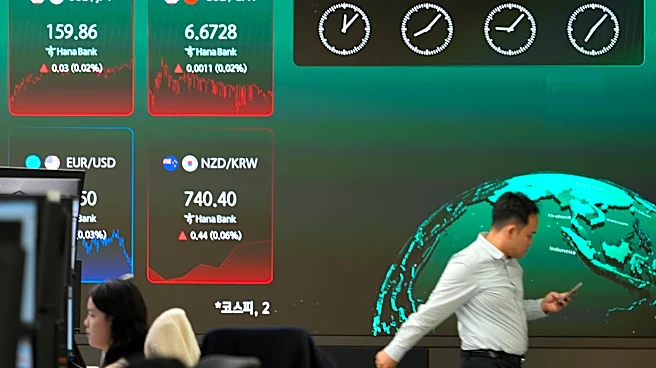
Huang's resignation carries significant implications for the U.S. technology sector and global AI development. Nvidia is a dominant force in AI hardware, and Huang's leadership was central to its innovation and market position. His departure due to national security concerns highlights the increasing scrutiny on the personal conduct of executives in critical technology sectors, especially when it intersects with international relations. The uncertainty surrounding Nvidia's leadership could affect investor confidence in AI companies and potentially slow the pace of AI infrastructure development, particularly for Asian AI hardware stocks that are highly dependent on U.S. advancements. This event also raises questions about the stability of upcoming public debuts for AI companies, such as Anthropic's anticipated IPO.
What's Next?
The immediate focus will be on how Colette Kress, as interim CEO, navigates Nvidia through this transition and maintains the company's trajectory in the highly competitive AI market. Market watchers will closely monitor Nvidia's stock performance and any strategic shifts under new leadership. The broader AI industry will also be observing the ripple effects, particularly concerning chip supply and the development of AI technologies. The incident may prompt other technology companies and government agencies to review their protocols regarding executive conduct and national security implications. Additionally, the U.S. producer price index for October is expected to be released, which could further influence market sentiment, especially given recent increases in fuel prices affecting shipping and warehousing costs.
Beyond the Headlines
This event underscores the intricate relationship between corporate leadership, personal ethics, and national security in an era of rapid technological advancement. The 'national security concerns' linked to Huang's affair suggest a heightened awareness of potential vulnerabilities within critical U.S. technology firms. It highlights how the personal lives of key executives can have far-reaching geopolitical and economic consequences, potentially influencing the competitive landscape of global technology. The incident could lead to a re-evaluation of corporate governance and vetting processes for executives in sensitive industries, emphasizing the need for robust safeguards against foreign influence or compromise. It also brings to light the immense power and influence wielded by individuals like Huang in shaping entire technological paradigms.