






What's Happening?
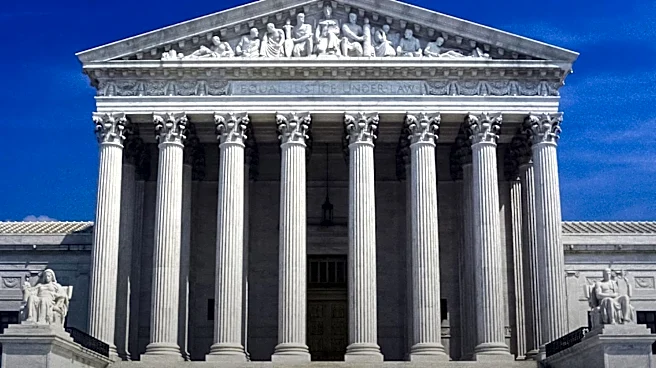
The U.S. Supreme Court on November 16 declined to review Custodia Bank's petition challenging the Federal Reserve's refusal to grant it a master account. This decision effectively ends Custodia's judicial path to direct access to the central bank's payment
systems. The Supreme Court did not provide an explanation for denying the writ of certiorari. This leaves intact an October 2025 ruling by the Tenth U.S. Circuit Court of Appeals, which held that regional Federal Reserve Banks have the discretion to reject master-account applications, even from institutions that are legally eligible. Custodia, a Wyoming-chartered lender, had applied for a master account with the Federal Reserve Bank of Kansas City in October 2020 and for Federal Reserve System membership in August 2021. The Kansas City Fed rejected the account request in January 2023, citing Custodia's crypto-focused business model and concerns about safe and sound banking. The Federal Reserve Board also denied membership due to perceived safety-and-soundness risks and inadequate risk-management for money-laundering and terrorism-financing concerns.
Why It's Important?
This Supreme Court decision has significant implications for financial technology companies, particularly those in the cryptocurrency sector, seeking direct access to the U.S. financial system. Without a master account, institutions like Custodia must rely on correspondent banks as intermediaries to access services such as Fedwire funds transfers and settlement. This reliance adds costs and potential delays, hindering their operational efficiency and competitiveness. The ruling reinforces the Federal Reserve's discretionary power in granting master accounts, which could be seen as a barrier to entry for innovative financial institutions that do not fit traditional banking models. While no nationwide precedent was set on the question of who may hold an account at a Reserve Bank, the outcome suggests a cautious approach by the Federal Reserve towards institutions with novel business models, especially those involving cryptocurrencies, due to concerns about financial stability and risk management. This could influence future regulatory frameworks and the pace of innovation in the financial sector.
What's Next?
With the Supreme Court declining to hear the case, Custodia Bank has exhausted its judicial avenues for direct access to the Federal Reserve's payment rails. This means Custodia and similar crypto-focused financial institutions will likely continue to operate through correspondent banking relationships, incurring additional costs and potential delays. The decision may prompt these institutions to explore alternative strategies for integration into the broader financial system, potentially through partnerships with traditional banks or by advocating for legislative changes that mandate clearer access criteria. The Federal Reserve's discretionary power, as affirmed by the Tenth Circuit's ruling, will continue to shape the landscape for new financial entrants. Future developments may include increased lobbying efforts by the crypto industry for more explicit regulatory guidelines or legislative action to define eligibility for master accounts, potentially reducing the ambiguity and discretion currently exercised by the Federal Reserve.
Beyond the Headlines
The Supreme Court's decision highlights a broader tension between financial innovation and regulatory caution within the U.S. financial system. The Federal Reserve's concerns about 'safe and sound banking' and 'money-laundering and terrorism-financing' risks underscore the challenges regulators face in integrating novel financial technologies, such as those involving cryptocurrencies, into existing frameworks. This case reflects an ongoing debate about the appropriate level of oversight and access for non-traditional financial institutions. The lack of a nationwide precedent from the Supreme Court means that the issue of master account access for eligible institutions remains somewhat fragmented, potentially leading to varying interpretations and outcomes across different Federal Reserve districts. This situation could foster an environment where regulatory clarity is sought through legislative means, as the industry pushes for a more defined pathway for innovative financial entities to participate directly in the national payment system, balancing innovation with systemic stability concerns.