
What's Happening?
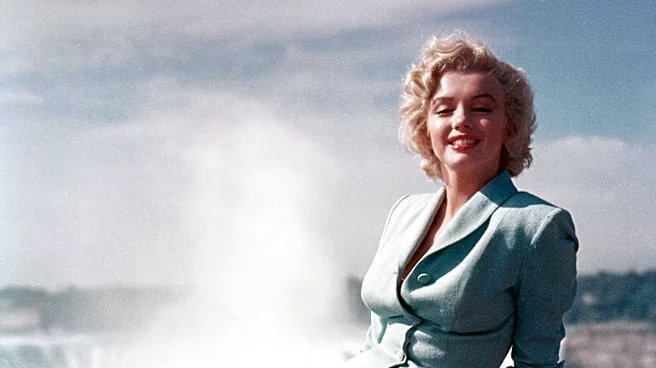
American actress and director Maggie Gyllenhaal announced that she abandoned the use of AI-generated video for her upcoming short film, 'Flesh Impact,' which imagines Marilyn Monroe at 100 years old. The
technology was intended to transform actress Dakota Johnson into an elderly version of Monroe. Gyllenhaal, who is also head of the jury at the Venice Film Festival, revealed this decision during 'The Future of Creativity' event in Venice. She stated that despite efforts, the AI-generated content "fundamentally did not work" and that Dakota Johnson's human performance was significantly more "moving, human, and alive." This comes amidst a broader discussion at the Venice Film Festival regarding the increasing push for AI in filmmaking as a cost-saving measure and an alternative to traditional acting.
Why It's Important?
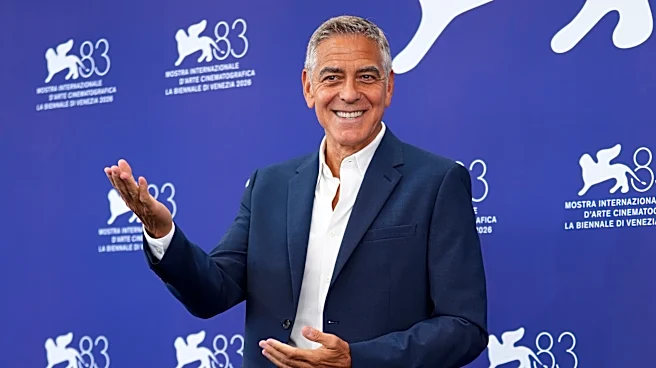
Gyllenhaal's experience highlights the current limitations of AI video technology, offering a degree of reassurance to actors and crew members concerned about job displacement in the film and TV industries. Her decision underscores the value of human performance and artistry over technological shortcuts, particularly in conveying nuanced emotions and authenticity. The ongoing debate at the Venice Film Festival, with figures like George Clooney expressing concerns about job losses and others like festival supremo Alberto Barbera acknowledging potential benefits, reflects a critical juncture for Hollywood. This situation emphasizes the tension between technological advancement and the preservation of human creative roles, impacting how future productions might balance efficiency with artistic integrity.
What's Next?
The film industry will likely continue to grapple with the integration of AI, with ongoing discussions about its ethical implications, job security, and creative boundaries. Gyllenhaal's public statement could influence other filmmakers to critically evaluate AI's capabilities before fully committing to its use in projects. There may be increased pressure on AI companies to improve the quality and emotional depth of their generated content to meet artistic standards. Furthermore, the conversation around licensing actors' likenesses for AI reproduction is expected to intensify, potentially leading to new industry guidelines or union negotiations to protect performers' rights and intellectual property.
Beyond the Headlines
Gyllenhaal's rejection of AI for her film touches upon deeper philosophical questions about the nature of art and human expression. It suggests that while AI can replicate images, it currently struggles to capture the intangible qualities that make a performance truly compelling and 'human.' This incident could fuel a broader cultural conversation about the irreplaceable value of human creativity in an increasingly automated world. It also raises ethical concerns about the potential for AI to devalue human talent and intellectual property, prompting a re-evaluation of how technology should serve art rather than replace it. The outcome of this debate could shape the future landscape of storytelling and artistic production for decades to come.