





What's Happening?
H2C Safety Pipe, Inc. (H2CSP), a developer of proprietary technologies for hydrogen transport and storage, has announced the expansion of its board of directors. The company welcomed Robert M. Hertzberg, Martin L. Adams, and Janice Lin to its board. These
appointments aim to bolster H2CSP's expertise in public policy, utility operations, infrastructure development, and hydrogen market formation as it moves to commercialize its patented Safety Pipe™ technology. Robert M. Hertzberg is a former Speaker of the California State Assembly and former Majority Leader of the California State Senate, known for his work in clean energy and climate policies. Martin L. Adams previously served as the General Manager and Chief Engineer of the Los Angeles Department of Water and Power (LADWP), the largest municipal utility in the United States. Janice Lin is the founder and CEO of the Green Hydrogen Coalition and a recognized clean energy executive. The expanded board also includes Rinaldo S. Brutoco, Chairman of the Board and founder of H2 Clipper, and Ángel Gurría, president of the Paris Peace Forum and former Secretary-General of the OECD.
Why It's Important?
The addition of these experienced leaders to H2C Safety Pipe's board is significant for the advancement of hydrogen infrastructure in the U.S. and internationally. Their combined expertise in public policy, utility operations, and clean energy market development is crucial for navigating the complex landscape of energy transition. Robert Hertzberg's background in shaping California's clean energy policies and his international recognition in the field will be instrumental in establishing regulatory frameworks and public trust. Martin Adams's experience in managing critical utility infrastructure, particularly his role in LADWP's transition to cleaner energy, provides invaluable insight into the operational challenges and opportunities of hydrogen deployment. Janice Lin's work in convening stakeholders to create scalable hydrogen markets will help bridge the gap between technology and commercial viability. This strategic expansion aims to address the critical need for safe, reliable, and economically viable hydrogen transport, which is a key missing link in the broader industrial decarbonization efforts.
What's Next?
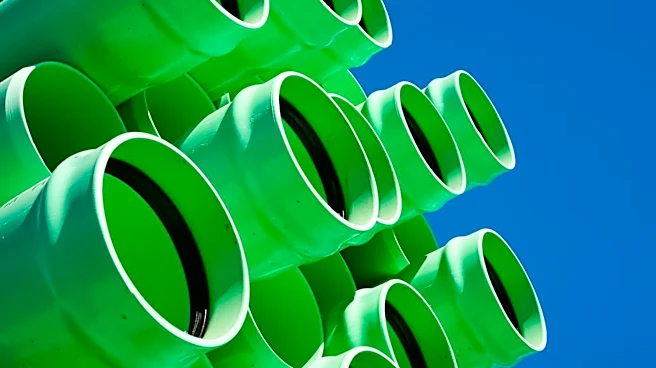
H2C Safety Pipe plans to commercialize and deploy its patented Safety Pipe™ technology in the United States and globally. The newly appointed board members will play a crucial role in this process by leveraging their extensive experience and networks. The company's technology, which includes three pipeline architectures designed for various applications and safety requirements, aims to minimize hydrogen leakage and accelerate the development of robust hydrogen infrastructure. Future steps will likely involve working with producers, off-takers, public agencies, and infrastructure partners to build the necessary distribution networks. The focus will be on ensuring public trust and attractive economics for scaling hydrogen infrastructure, potentially through the repurposing of existing underground infrastructure and the deployment of advanced monitoring and control systems. The company will also continue to engage with stakeholders to foster market conditions conducive to the widespread adoption of hydrogen.
Beyond the Headlines
The expansion of H2C Safety Pipe's board highlights a broader trend in the energy sector: the increasing emphasis on hydrogen as a critical component of future clean energy systems. The involvement of high-profile figures from both public policy and utility sectors underscores the recognition that successful energy transitions require not only technological innovation but also robust regulatory support, public acceptance, and integrated infrastructure planning. The focus on 'safety' in hydrogen transport, as indicated by the company's name and technology, addresses a key concern that could otherwise impede its widespread adoption. This development reflects a growing understanding that the transition to sustainable energy involves complex challenges beyond just production, extending to safe and efficient distribution. The collaboration of diverse experts on the board suggests a holistic approach to overcoming these challenges, aiming to build a comprehensive ecosystem for hydrogen that can support industrial decarbonization and contribute to climate goals.