






What's Happening?
The USU/Utah County Extension Service, through horticulture assistant Elizabeth Binks, has issued comprehensive gardening advice for November. This guidance emphasizes preparing gardens for winter by focusing on soil health, wildlife support, and tool
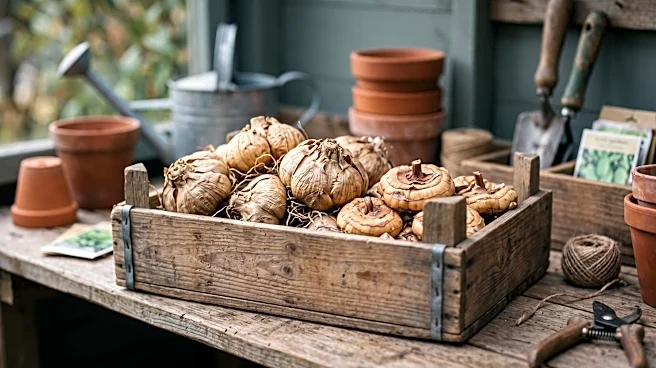
maintenance. Key recommendations include leaving healthy plant material like seed heads and hollow stems to provide food and shelter for beneficial insects and birds. Gardeners are also advised to cover bare soil with mulch or compost to protect it, suppress weeds, and enrich it with organic matter. Specific tasks for November involve digging and storing tender bulbs such such as dahlias, cannas, and gladiolus before the ground freezes, and giving lawns a final mowing to a height of 1.5 to 2 inches to prevent snow mold. Additionally, thorough watering of evergreen and newly planted trees and shrubs is recommended before the ground freezes, and proper storage of garden tools and hoses is crucial to prevent damage and rust.
Why It's Important?
This guidance is important for U.S. gardeners as it provides practical steps to ensure garden health and productivity through the winter months and into the next growing season. By protecting soil with mulch and compost, gardeners can prevent erosion and nutrient loss, contributing to more sustainable practices. Supporting beneficial wildlife through leaving plant material helps maintain ecological balance within local ecosystems, which is vital for pollination and pest control. Proper winterization of plants like tender bulbs and roses prevents loss and saves gardeners the cost and effort of replacement. Furthermore, maintaining tools extends their lifespan, reducing waste and expenditure. Adhering to these recommendations can lead to healthier gardens, reduced environmental impact, and more successful gardening outcomes across various U.S. regions experiencing cold winters.
What's Next?
Gardeners who follow these November guidelines can expect their gardens to be better prepared for the dormant winter period. The protected soil will be more fertile and less prone to erosion, setting the stage for a more robust spring planting season. Overwintering insects and birds will have necessary resources, contributing to a healthier garden ecosystem when warmer weather returns. The proper storage of tools will ensure they are ready for use in the spring, avoiding last-minute repairs or replacements. As winter progresses, gardeners should continue to monitor weather conditions, especially for unusually mild or dry spells that might necessitate additional watering for evergreens. The next major gardening activities will likely involve planning for spring planting and beginning early spring clean-up once the threat of hard freezes has passed.
Beyond the Headlines
The advice from the USU/Utah County Extension Service reflects a broader shift towards more ecologically conscious gardening practices. The emphasis on leaving plant material for wildlife and using natural soil amendments like compost highlights a growing understanding of the interconnectedness of garden ecosystems. This approach moves beyond purely aesthetic gardening to embrace biodiversity and environmental stewardship. It also underscores the role of extension services in providing localized, research-backed information to the public, empowering individuals to make informed decisions that benefit both their personal gardens and the wider environment. This trend suggests a future where gardening is increasingly viewed as a component of broader ecological health, promoting resilience against climate fluctuations and supporting local wildlife populations.