


What's Happening?
To ensure Amaryllis bulbs bloom for Christmas, a crucial step in September is to stop watering them and induce dormancy. According to Homes & Gardens, this process involves placing the bulb in a dark, cool, and dry location, such as a closet, for 8-10
weeks. Gail Pabst, a gardening expert and Marketing Director for the National Garden Bureau, explains that this 'nap' period is essential for the bulb to rest before it can flower again. This method mimics the plant's natural dry-season cycle in its native South African habitat, where it undergoes a period of rest between foliage growth and flowering. During this dormancy period, the leafy growth of the Amaryllis will turn yellow and die back, which is a normal part of the bulb's preparation for bud development. After the 8-10 week rest, the bulb should be brought out, repotted, watered, and exposed to light to break its dormancy and trigger the growth of flower stalks, ready for festive blooming.
Why It's Important?
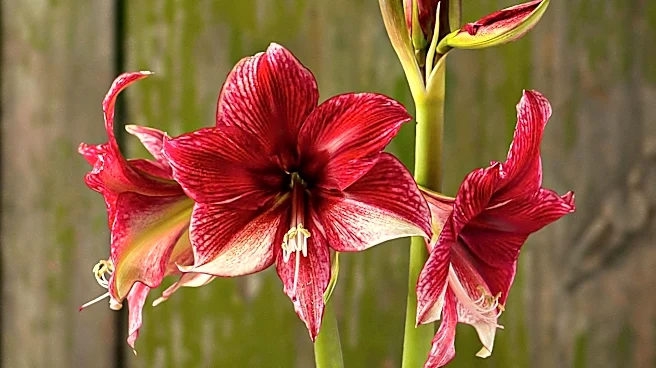
This specific September care routine is vital for Amaryllis growers because it directly influences the timing and success of their Christmas blooms. Without a proper dormancy period, Amaryllis bulbs may not flower at all, or their blooms could be delayed and less robust. The forced dormancy allows the bulb to conserve energy and redirect its resources towards flower production, rather than continuous foliage growth. This controlled resting phase is a critical horticultural technique that enables gardeners to manipulate the plant's natural cycle to align with desired blooming periods, such as the holiday season. For those who enjoy Amaryllis as a traditional Christmas decoration, understanding and implementing this September step is key to achieving the iconic red and white blooms that are a staple for holiday displays, ensuring a reliable and vibrant floral show year after year.
What's Next?
After the 8-10 week dormancy period, typically around late November or early December, the Amaryllis bulb will be ready to be brought out of its cool, dark resting place. The next steps involve repotting the bulb if necessary, resuming regular watering, and placing it in a bright location. This change in environment will signal to the bulb that it's time to break dormancy and begin its growth cycle towards flowering. Gardeners can anticipate the emergence of flower stalks, followed by the development of the characteristic large, trumpet-shaped blooms, just in time for Christmas. Following the holiday season, the cycle continues with cutting back the spent flowers and allowing the plant to return to a period of leafy growth, preparing it for the next year's dormancy and subsequent blooms. Proper storage of the bulbs post-blooming is also crucial for ensuring a returning display in subsequent years.
Beyond the Headlines
The practice of inducing dormancy in Amaryllis bulbs highlights a broader principle in horticulture: understanding and mimicking a plant's natural environmental cues to optimize its growth and flowering. This technique goes beyond simple watering and feeding, delving into the plant's physiological needs and its evolutionary adaptations to seasonal changes. It underscores the gardener's role in actively managing a plant's life cycle, transforming a natural process into a cultivated outcome. This approach can be seen as a form of bio-mimicry, where human intervention is guided by natural patterns. Furthermore, the tradition of Amaryllis as a Christmas bloom connects gardening practices with cultural celebrations, demonstrating how horticultural knowledge can enhance festive traditions and bring natural beauty into homes during specific times of the year, fostering a deeper appreciation for plant biology and seasonal rhythms.