




What's Happening?
The wellness travel industry is undergoing a significant transformation, moving beyond traditional spa and yoga retreats to embrace 'blue wellness,' which emphasizes meaningful interactions with natural water environments. This trend is driven by travelers
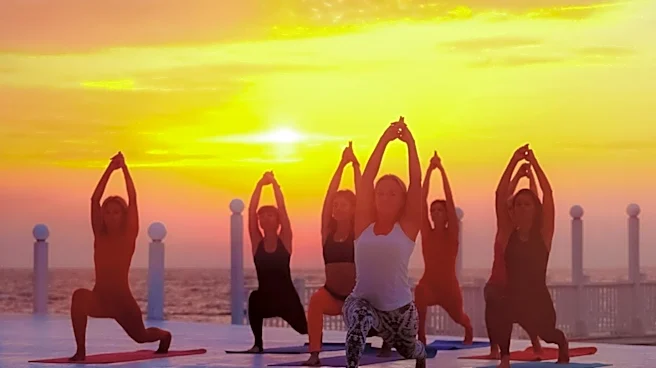
seeking deeper relaxation, health maintenance, and experiences that positively contribute to ecosystems. According to Grand View Research, the global wellness tourism market, valued at USD 990.4 billion in 2025, is projected to reach USD 2.4 trillion by 2035. Travelers are increasingly opting for activities like soaking in hot springs, kayaking, snorkeling, and meditating by water bodies, reflecting a desire to slow down and recover from burnout and digital fatigue. Destinations like Japan, known for its onsen towns and water-based cultural practices, and the Maldives, which now offers marine conservation initiatives alongside traditional water activities, are at the forefront of this shift. The focus is less on packed itineraries and more on restorative journeys that allow for rest and reflection, with guests prioritizing recovery over mere vacationing.
Why It's Important?
This evolution in wellness travel signifies a broader societal shift towards holistic well-being and environmental consciousness. For the U.S. travel and hospitality industry, this trend presents both opportunities and challenges. Resorts and travel companies that adapt to offer authentic 'blue wellness' experiences, incorporating elements like nature immersion, conservation efforts, and longevity-focused programs, are likely to attract a growing segment of travelers. This could lead to increased investment in eco-tourism infrastructure and partnerships with environmental organizations. Furthermore, the emphasis on longevity-focused travel, which aims for sustainable health and vitality, could influence the development of specialized wellness packages that integrate medical and health services. Travelers across all age groups are driving this trend, with millennials combining wellness with family holidays, and Gen Z seeking digital detoxes and community-based tourism. This diverse demand necessitates a varied approach to wellness offerings, impacting marketing strategies and product development within the U.S. tourism sector.
What's Next?
The travel industry is expected to further integrate 'blue wellness' and longevity concepts into its offerings. This will likely involve the development of more specialized retreats that combine water-based activities with educational components on marine ecosystems and conservation. Hotels and resorts may invest in training staff to facilitate these experiences and partner with local communities to offer authentic cultural interactions. We can anticipate a rise in demand for destinations that provide access to diverse natural water environments, such as coastal regions, lakes, and rivers, prompting infrastructure development in these areas. Travel agencies will likely curate more personalized itineraries that prioritize slower travel, longer stays, and opportunities for genuine connection with nature. Additionally, as travelers become more environmentally conscious, there will be increased scrutiny on the sustainability practices of travel operators, pushing the industry towards more responsible tourism models. The focus on 'recovery' over 'vacation' will continue to shape how travel packages are designed and marketed.
Beyond the Headlines
The shift towards 'blue wellness' and longevity in travel reflects a deeper societal yearning for reconnection—with nature, with oneself, and with community—in an increasingly fast-paced and digitally saturated world. This trend highlights a growing awareness of the intrinsic link between environmental health and human well-being. Ethically, it challenges the tourism industry to move beyond superficial experiences and contribute positively to the destinations it utilizes, particularly concerning fragile marine and freshwater ecosystems. Legally, this could lead to increased regulations around sustainable tourism practices and environmental protection in popular wellness destinations. Culturally, it signifies a return to ancient wisdom that recognized the healing power of water and nature, moving away from purely commercialized wellness models. This long-term shift could foster a more mindful approach to travel, where the journey itself becomes a tool for personal growth and environmental stewardship, potentially influencing broader lifestyle choices beyond vacationing.