





What's Happening?
Rossano Brazzi, the prolific Italian actor, is being recognized for his sartorial elegance in the 1955 film 'Summertime,' where he played Renato de Rossi. The film, released on June 21, 1955, and directed by David Lean, features Brazzi opposite Katharine
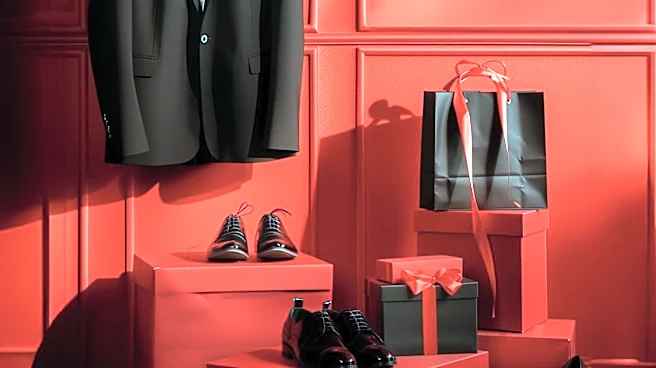
Hepburn. Brazzi's character, an antique store owner in Venice, is noted for his sophisticated Italian tailoring, particularly a pearl-gray serge suit worn towards the end of the movie. This suit, characterized by its single-breasted 3/2.5-roll jacket with notch lapels, spalla camicia sleeve-heads, and a ventless back, exemplifies Neapolitan tailoring. His attire also includes generously cut double-pleated trousers, a white open-neck shirt, and black calfskin apron-toe derbies. The attention to detail in his costume, designed by Rosi Gori (uncredited), underscores the impact of tasteful tailoring even in a seemingly simple ensemble.
Why It's Important?
The portrayal of Italian tailoring in 'Summertime' through Rossano Brazzi's character is significant for its influence on cinematic fashion and its reflection of post-war European style. The film, set in Venice, showcased a distinct aesthetic that contrasted with more rigid American and British fashion trends of the era. Brazzi's relaxed yet refined look, featuring an open-neck shirt with a suit, helped popularize a more casual approach to formal wear, particularly for summer settings. This cinematic representation contributed to the global appreciation of Italian craftsmanship in menswear, highlighting features like natural shoulders and specific pocket styles. For the U.S. audience, it offered a glimpse into European elegance, potentially influencing fashion trends and the perception of luxury and style in the mid-20th century. The film's enduring legacy in fashion continues to inspire designers and enthusiasts interested in classic menswear.
What's Next?
While 'Summertime' is a classic film, its continued discussion, particularly around its fashion elements, suggests an ongoing appreciation for its aesthetic contributions. The detailed analysis of Rossano Brazzi's wardrobe in articles like this indicates a sustained interest in vintage fashion and the historical context of tailoring. This could lead to renewed interest in the film itself, potentially driving viewership on streaming platforms or through classic film screenings. For fashion enthusiasts and designers, the film's costumes may continue to serve as a source of inspiration for contemporary collections that draw on classic Italian styles. Furthermore, the focus on specific tailoring techniques, such as Neapolitan tailoring, could encourage a deeper dive into the craft, fostering educational content or workshops on traditional menswear construction.
Beyond the Headlines
Beyond its immediate cinematic and fashion appeal, the costuming in 'Summertime' subtly reflects broader cultural shifts in the mid-20th century. The relaxed elegance of Brazzi's attire, particularly the open-neck shirt with a suit, symbolizes a move away from more rigid post-war formality towards a more comfortable yet still sophisticated style. This shift was indicative of changing social norms and a growing desire for leisure and personal expression in fashion. The film's setting in Venice, a romantic and picturesque European city, further enhanced the allure of this relaxed sophistication, associating it with travel, romance, and a certain European charm. The enduring fascination with Brazzi's 'Summertime' wardrobe highlights how film can not only entertain but also document and influence evolving cultural tastes and sartorial philosophies, making it a valuable artifact for understanding historical fashion trends and their societal underpinnings.