






What's Happening?
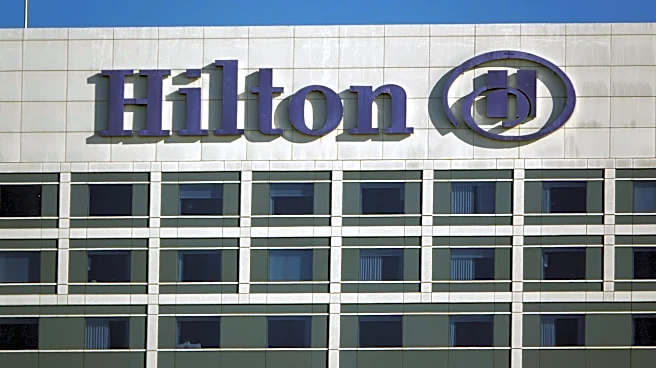
In 2007, Blackstone acquired Hilton in a leveraged buyout valued at approximately $26 billion, paying $47.50 per share, which represented about a 40% premium over the prior closing price. The deal was heavily financed by debt, with Blackstone's funds
investing around $6.5 billion in equity. The timing of the acquisition was challenging, as it closed just before the 2008 financial crisis, leading to a collapse in travel demand and credit markets. Despite initial expectations that it would be one of the worst buyouts, Blackstone restructured the deal in 2010. This involved negotiating with lenders to accept discounted repayment on a portion of the debt, while Blackstone injected additional equity. Under the leadership of CEO Chris Nassetta, Hilton refocused its business strategy on growing its brands and expanding globally. This strategic shift and financial restructuring ultimately led to a successful turnaround.
Why It's Important?
This case study highlights the critical role of strategic restructuring and patient investment in the private equity landscape, especially during economic downturns. Blackstone's ability to navigate the post-2008 financial crisis with Hilton demonstrates that well-structured deals and operational flexibility can overcome adverse market conditions. The success of Hilton's turnaround, culminating in its 2013 IPO, provided a significant return for Blackstone, making it one of the most profitable private equity deals in history with an estimated profit of $14 billion. This outcome reinforces the idea that long-term vision and the willingness to inject further capital during difficult times can yield substantial gains, influencing future private equity strategies and investor confidence in distressed asset management. It also underscores the importance of strong management, as CEO Chris Nassetta's leadership in refocusing the business was a key factor in its recovery and growth.
What's Next?
Following its successful turnaround and IPO in December 2013, Hilton continued to operate as a publicly traded company. Blackstone gradually sold off its remaining stake in Hilton over the subsequent years, completing its exit in 2018. The success of this deal is likely to continue influencing private equity firms to consider similar strategies of restructuring and long-term operational improvements when faced with challenging market conditions or underperforming assets. For the hospitality industry, Hilton's recovery and expansion under Nassetta's leadership set a precedent for navigating economic volatility and focusing on brand growth. Future private equity investments in the sector may draw lessons from this case, emphasizing the importance of robust financial structures and adaptable management teams to ensure resilience and profitability.
Beyond the Headlines
The Hilton buyout by Blackstone offers deeper insights into the dynamics of leveraged buyouts and corporate resilience. It illustrates that while leverage can amplify returns, it also introduces significant risk, especially when economic conditions deteriorate unexpectedly. The ability of Blackstone to restructure the debt and inject more equity, rather than abandoning the investment, highlights a commitment to value creation beyond mere financial engineering. This case also underscores the importance of operational leadership; Chris Nassetta's strategic refocusing of Hilton's business on brand growth and global expansion was crucial. It suggests that successful private equity interventions often combine financial acumen with strong operational management. Furthermore, the deal serves as a testament to the potential for long-term value creation in private equity, even when initial timing appears disastrous, provided there is flexibility in debt structure and a clear operational strategy.