
What's Happening?
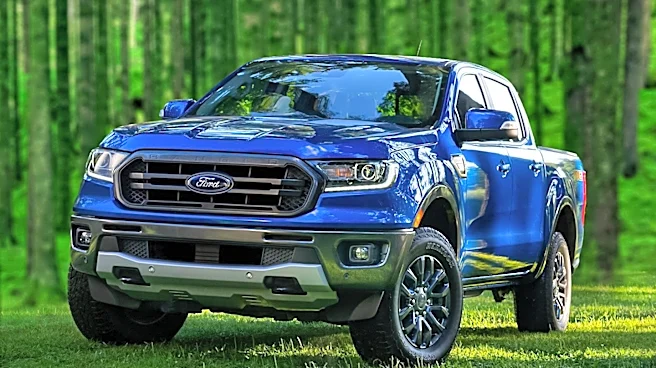
Ford is undertaking a significant revamp of its Louisville Assembly Plant in Kentucky to support the production of a new affordable electric pickup truck. This initiative is part of Ford's broader strategy
to revolutionize the electric vehicle market by making battery-powered transportation more accessible to the masses. The plant will adopt a new modular assembly process for the upcoming Universal Electric Vehicle (UEV) platform, which aims to reduce costs and improve efficiency. The UEV platform will feature a modular setup that reduces the number of components and fasteners, utilizing large structural castings and a central lithium-iron-phosphate battery pack. This battery serves as both the primary energy storage and the structural floor of the cabin. Production at the retooled facility is scheduled to begin in 2027, with the electric pickup expected to debut as a 2028 model year vehicle.
Why It's Important?
The revamp of the Louisville Assembly Plant is crucial for Ford's strategy to capture a significant share of the electric vehicle market by offering a budget-friendly electric pickup truck. This move is expected to drive widespread EV adoption among working families who require affordable and practical transportation solutions. By focusing on manufacturing efficiency and structural simplicity, Ford aims to lower production costs and offer the new electric truck at a competitive price point. This strategy could potentially disrupt the current market dynamics, where affordable electric options are limited. The success of this initiative could also influence other automakers to adopt similar strategies, thereby accelerating the transition to electric vehicles in the U.S.
What's Next?
As Ford progresses with the revamp of the Louisville Assembly Plant, industry competitors like General Motors will be closely monitoring the developments. The production timeline indicates that the electric pickup will be available in showrooms by 2028. Ford plans to release final specifications, including towing capacity and payload ratings, as the factory tooling nears completion. The company is targeting a base price of approximately $30,000 for the entry-level trim, with higher trims offering additional features and capabilities. This pricing strategy is designed to appeal to budget-conscious buyers, even without federal tax credits. The success of this initiative could lead to further innovations in the electric vehicle market.