



What's Happening?
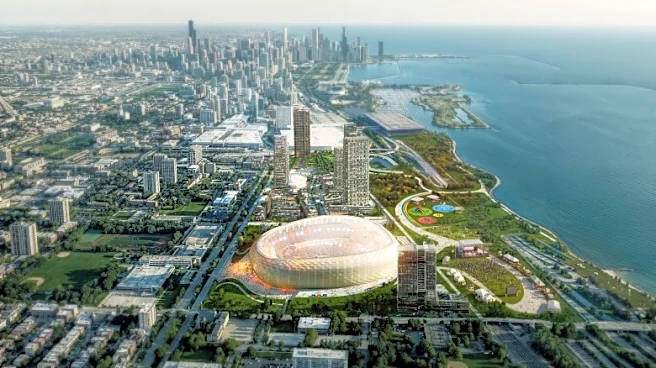
Chicago Bears owner George McCaskey, alongside NFL Commissioner Roger Goodell and President/CEO Kevin Warren, recently met with Illinois legislative leaders to discuss potential stadium locations in Arlington Heights or Chicago. Concurrently, the team
is also exploring a stadium and mixed-use development in Hammond, Indiana, where they are finalizing due diligence on two sites. This comes as developers have proposed a $10 billion plan to keep the team in Chicago, offering to purchase the Bears' existing 326-acre property in Arlington Heights. The Bears' stadium search has been ongoing for five and a half years, with Indiana's offer including $1 billion in revenue and the team pledging $2 billion for the Wolf Lake area sites in Hammond.
Why It's Important?
The ongoing discussions regarding the Chicago Bears' new stadium have significant implications for both Illinois and Indiana, potentially impacting local economies, urban development, and state revenues. For Illinois, retaining the Bears could mean substantial economic activity, job creation, and a boost to the state's image, especially with a $10 billion proposal on the table for a Chicago-based stadium. Conversely, losing the team to Indiana would result in a significant economic blow to Illinois. For Indiana, securing the Bears would represent a major win, bringing in substantial investment and revenue, as evidenced by their $1 billion offer. The decision will affect local businesses, real estate markets, and the overall civic pride of the chosen location, highlighting the intense competition between states for major sports franchises.
What's Next?
Illinois Governor Pritzker has indicated that a vote on the Bears' stadium could occur in early December. The team continues to engage with leaders in both Illinois and Indiana, suggesting that negotiations are still active on multiple fronts. The proposal from developers to keep the team in Chicago, which includes buying the Arlington Heights land, adds another layer of complexity to the decision-making process. Stakeholders, including state legislators, local government officials, and community groups in both Chicago and Hammond, will be closely watching these developments. The outcome will likely involve significant legislative action and financial commitments from either state, with the Bears ultimately deciding which offer best aligns with their long-term vision.
Beyond the Headlines
The protracted stadium search for the Chicago Bears underscores a broader trend of professional sports franchises leveraging their economic impact to secure favorable deals from state and local governments. This situation highlights the intense competition among cities and states to host major sports teams, often leading to substantial public subsidies and tax incentives. The ethical implications of such deals, including the use of taxpayer money for private enterprises, are frequently debated. Furthermore, the development plans often extend beyond just a stadium, envisioning mixed-use developments that can transform entire neighborhoods, raising questions about urban planning, gentrification, and community benefits. The decision will not only determine the Bears' future home but also set a precedent for how such large-scale public-private partnerships are negotiated and perceived.