

What's Happening?
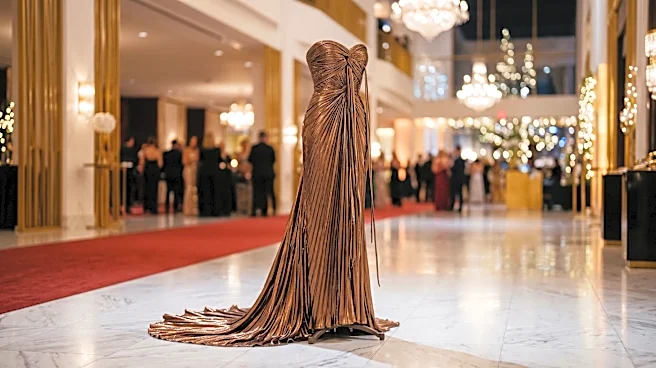
Content creator Ashtin Earle attended the 2026 CFDA Fashion Awards in New York, wearing a metallic gown from Roberto Cavalli's Fall 2005 ready-to-wear collection. The strapless bronze-toned dress featured a gathered, twisted bust detail, long thin ties,
and a narrow, vertically pleated skirt with a small train. Earle accessorized minimally, including what appeared to be a black beaded rosary. This appearance follows a trend of celebrities opting for archival Roberto Cavalli pieces on the red carpet. Other notable figures recently seen in vintage Cavalli include Lucy Freyer, who wore a 2004 floral dress to WWD Honors, Katy Perry in a 2004 animal-print gown for a Dolly Parton tribute, and La La Anthony in 2002 printed separates and boots for a 'Today With Jenna & Sheinelle' appearance. Earle's choice of a metallic, pleated design stood out from the floral and animal motifs favored by others.
Why It's Important?
The increasing presence of vintage Roberto Cavalli on prominent red carpets, such as the CFDA Fashion Awards, highlights a growing appreciation for archival fashion within the industry. This trend signifies a shift towards sustainability and uniqueness, as celebrities and stylists seek out distinctive pieces with historical significance rather than exclusively new collections. For brands like Roberto Cavalli, this resurgence in visibility for their past designs can reignite interest and reinforce their legacy in luxury fashion. It also influences consumer trends, potentially boosting the market for vintage and pre-owned designer clothing. The choice by influential figures like Ashtin Earle, who recently signed with IMG Models, further amplifies this trend, showcasing how content creators are shaping fashion narratives and bringing older collections back into the contemporary spotlight.
What's Next?
The continued embrace of archival fashion by celebrities suggests that this trend is likely to persist and potentially expand. Fashion houses may increasingly delve into their own archives for inspiration or re-release iconic pieces, capitalizing on the renewed interest. We might see more collaborations between vintage dealers and stylists, as well as a greater emphasis on storytelling around the history of specific garments. For Roberto Cavalli, this could translate into increased brand relevance and potentially influence future collection designs, perhaps incorporating elements from their popular early 2000s aesthetic. The visibility gained from these red carpet moments could also lead to a surge in demand for vintage Cavalli pieces in the resale market, impacting pricing and availability for collectors and enthusiasts.
Beyond the Headlines
The trend of wearing archival fashion extends beyond mere aesthetics, touching upon broader themes of sustainability and conscious consumption in the fashion industry. By choosing vintage pieces, celebrities implicitly endorse a more circular economy, reducing the demand for new production and its associated environmental impact. This movement also challenges the traditional fashion cycle, which often prioritizes newness above all else, by celebrating the enduring quality and design of past collections. Culturally, it reflects a nostalgia for specific eras, in this case, the early 2000s, and allows for a reinterpretation of those styles in a modern context. Legally and ethically, the rise of vintage fashion also brings attention to issues of authenticity and preservation, as the value and integrity of these historical garments become more significant.