


What's Happening?
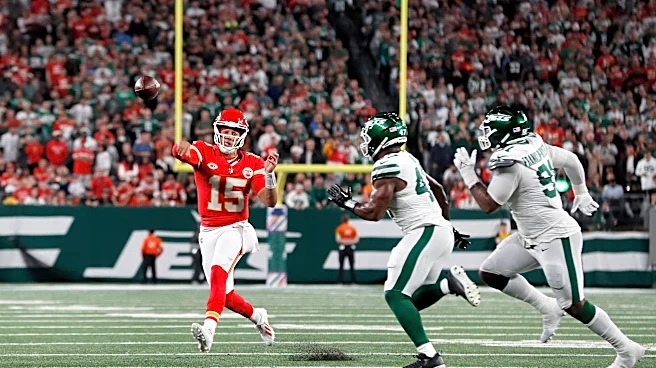
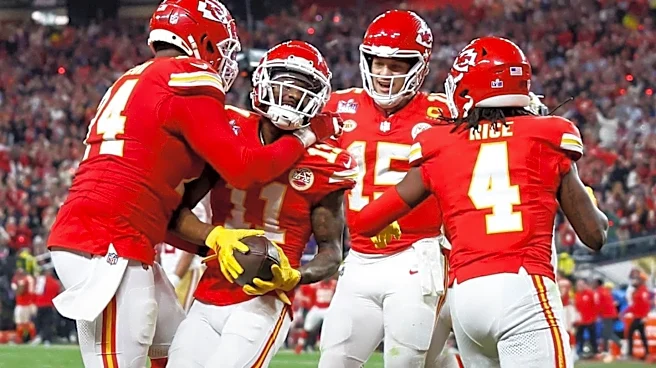
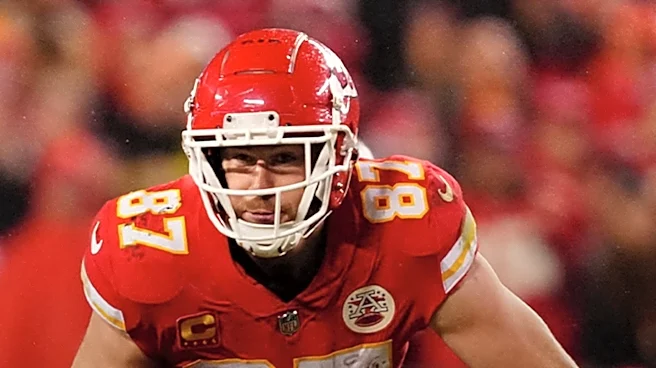
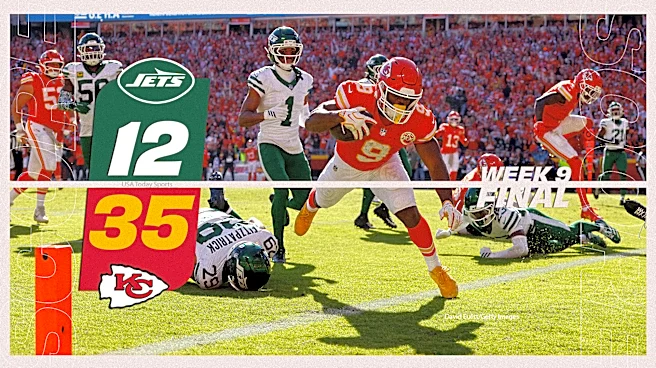
Kansas City Chiefs tight end Travis Kelce scored a rushing touchdown in the third quarter of a game against the Jets, extending the Chiefs' lead to 21-12. The play occurred on fourth down after quarterback Patrick Mahomes was stopped at the 1-yard line.
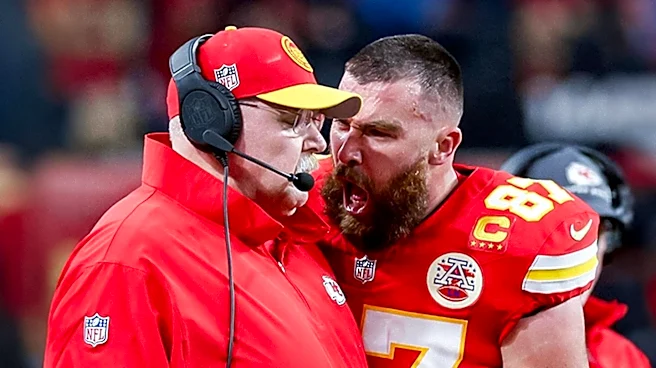
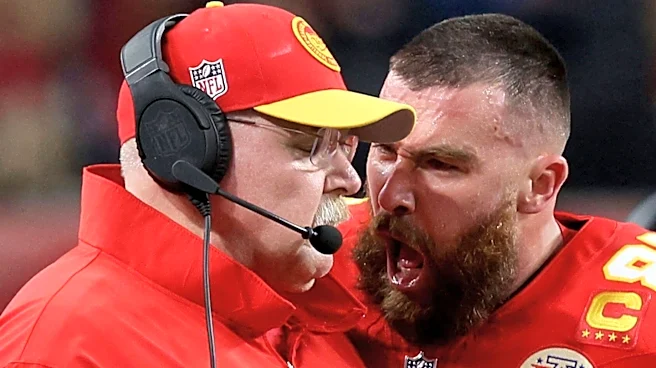
Head coach Andy Reid opted to go for it, and Mahomes delivered a two-handed chest pass to Kelce, who then barreled into the end zone. This marked Kelce's 87th career touchdown and his third career rushing touchdown. The Chiefs' drive for the score covered 60 yards, aided by a Jets' kickoff that went out of bounds, giving Kansas City favorable field position.
Why It's Important?
This touchdown highlights the Chiefs' aggressive play-calling under Head coach Andy Reid, particularly their willingness to go for it on fourth down in critical situations. It also underscores Travis Kelce's versatility and importance to the Chiefs' offense, demonstrating his ability to contribute not only as a receiver but also in short-yardage rushing situations. For the Jets, the kickoff out of bounds that set up the short field for the Chiefs proved costly, emphasizing the impact of special teams errors on game outcomes. The play's success reinforced the Chiefs' offensive strength and their capacity to convert high-pressure opportunities into points.
What's Next?
The Chiefs' continued success with aggressive fourth-down calls and creative play designs, such as Kelce's rushing touchdown, will likely influence other NFL teams to analyze and potentially adopt similar strategies. This play could also lead to increased scrutiny of special teams performance, particularly kickoffs, as teams aim to avoid giving opponents advantageous field position. For Travis Kelce, adding to his rushing touchdown tally further solidifies his reputation as one of the most dynamic and multi-faceted tight ends in NFL history, potentially leading to more diverse play calls involving him in the future.
Beyond the Headlines
Travis Kelce's rushing touchdown is more than just a score; it's a testament to the strategic evolution of the tight end position in the NFL. Historically, tight ends were primarily blockers or short-yardage receivers. However, players like Kelce have redefined the role, becoming central figures in their team's passing and even rushing attacks. This play exemplifies the creative ways offensive coordinators are utilizing their most talented players, blurring traditional positional boundaries. It also speaks to the trust between a coach and his star players, allowing for unconventional yet effective play calls in high-stakes moments, ultimately shaping the modern offensive landscape of professional football.