


What's Happening?
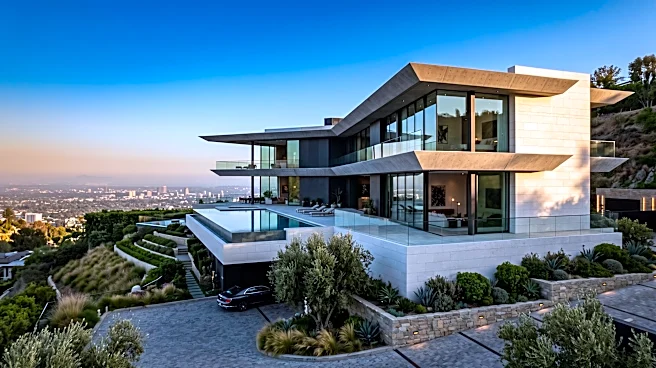
Billionaires in Los Angeles are increasingly purchasing existing luxury homes, demolishing them, and constructing larger estates, leading to a significant divide in the high-end real estate market. This trend is particularly evident in areas like Beverly
Hills, Bel Air, and Malibu, where the ultra-wealthy are willing to pay a premium for privacy, prime locations, and the ability to build custom residences. According to Mauricio Umansky, CEO and founder of The Agency, this behavior is driving up prices and intensifying competition for a limited number of properties. Daniel Amodeo, president of Amo Realty, notes that for these buyers, the value of the existing house becomes secondary to the land it occupies. This phenomenon is not solely driven by old money; new tech wealth also plays a substantial role, with figures like former Google CEO Eric Schmidt and Coinbase CEO Brian Armstrong making significant luxury real estate acquisitions. California boasts six of the ten most expensive ZIP codes in the U.S., with Newport Coast leading at a median list price of $12.5 million.
Why It's Important?
This trend signifies a growing economic stratification within California's luxury real estate market, where even millionaires are being priced out by billionaires. The concentration of wealth in a few exclusive ZIP codes, such as Beverly Hills and Montecito, highlights an increasing disparity. This dynamic impacts the availability and affordability of high-end properties, making it challenging for those with 'mere millions' to compete. The practice of tearing down existing homes to build larger ones also raises concerns about neighborhood character, environmental impact, and the preservation of historic properties. As Kristina Quesada, co-founder of the Yost Quesada Team, points out, the wealthiest buyers are seeking scarcity, exclusivity, and the ability to create truly individual living experiences, which further inflates property values and limits access for others. This situation reflects broader economic trends where the ultra-wealthy are reshaping urban landscapes to fit their specific demands.
What's Next?
The ongoing demand from billionaires for prime locations and custom-built estates is expected to continue driving up prices in California's luxury real estate market. This will likely lead to further competition for a shrinking supply of desirable land. Neighbors and regulators are already pushing back against this hyper-development, with complaints about blocked views, environmental concerns, and the demolition of historic properties. Legal challenges, such as the case involving Milwaukee Brewers owner Mark Attanasio and the California Coastal Commission, are becoming more common. Homeowner groups are also utilizing zoning ordinances and historic preservation overlay zones to curb the trend of 'mansionization.' These efforts suggest a potential increase in regulatory scrutiny and community activism aimed at mitigating the impact of billionaire-driven development on local communities and the environment.
Beyond the Headlines
The phenomenon of billionaires tearing down mansions to build even larger ones in Los Angeles reveals deeper societal implications beyond real estate economics. It underscores a widening wealth gap and the power of extreme wealth to reshape physical environments and social structures. This 'gentrification by billionaire,' as the Los Angeles Times describes it, raises ethical questions about resource allocation, community displacement, and the sustainability of such development. The pursuit of ultimate privacy, security, and customization by the ultra-wealthy can lead to the erosion of public access, as seen in disputes over beach access. Furthermore, the influx of new tech money into these markets highlights a shift in the sources of extreme wealth and their impact on traditional luxury enclaves. This trend could exacerbate social tensions and calls for wealth redistribution or stricter land-use regulations in the long term.