







What's Happening?
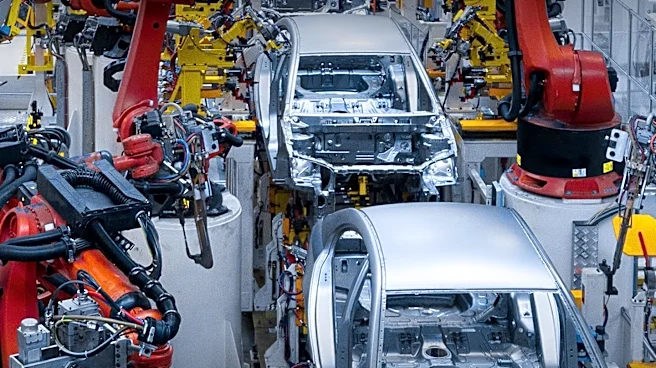
A global study by Hexagon reveals that both adults and children are open to the use of robots in workplaces, particularly in industrial settings like factories and warehouses. The study, part of Hexagon's Robot Generation research, indicates that 68%
of adults prefer robots for tasks such as lifting and transporting heavy items, while 63% are comfortable with robots in industrial environments. However, there is significant resistance to robots in roles requiring empathy, such as caregiving, with 71% of adults preferring human caregivers. The study also highlights a generational shift, with children more likely to view robots as full colleagues compared to adults.
Why It's Important?
The findings reflect a cautious yet growing acceptance of robotics in specific sectors, emphasizing the need for clear governance and ethical guidelines as robot integration increases. The preference for robots in industrial settings suggests potential for increased efficiency and safety in these environments. However, the reluctance to accept robots in healthcare and education underscores the importance of human interaction in these fields. As industries continue to adopt robotic technologies, understanding public sentiment will be crucial in shaping policies and ensuring that technological advancements align with societal values.
What's Next?
As the demand for robots in industrial settings grows, companies may focus on developing technologies that enhance safety and efficiency in these environments. Policymakers and industry leaders will need to establish clear regulations to address concerns about security, reliability, and trust. Additionally, as the generational shift towards greater acceptance of robots continues, educational initiatives may be necessary to prepare future workforces for collaboration with robotic technologies. The study suggests that the path to widespread adoption of robots will likely begin in industries where tasks are well-defined and safety protocols are established.