




What's Happening?
The European Commission has introduced a Quantum Act, a new regulation designed to transform Europe's quantum research into marketable products, secure the supply of critical components, and prepare public computer systems for advanced encryption. Concurrently,
the proposal grants the Commission the legal authority to establish a Sovereign Tech Equity Fund (STEF). This fund aims to acquire stakes in strategic European technology companies. While the Quantum Act outlines a framework for research, infrastructure, and industrialization, and mandates that public buyers of quantum technology prioritize EU-controlled suppliers and approved partners, it does not allocate a specific budget for the STEF. The fund is intended to be operational by the start of the 2028-2034 EU budget cycle. The Commission's initiative seeks to address Europe's challenge in commercializing research, scaling up startups, and reducing reliance on non-EU technology providers, particularly in critical areas like cloud services and quantum computing.
Why It's Important?
This initiative is significant for the U.S. technology sector and its global market presence, particularly for companies operating in or with the European Union. The Quantum Act's provisions, which limit eligible providers for public quantum technology purchases to EU-controlled entities and authorized partners, could create barriers for U.S. tech firms seeking to engage with European public sector contracts. This move reflects a broader European policy trend towards 'tech sovereignty,' aiming to reduce dependence on American technology providers. The establishment of the Sovereign Tech Equity Fund, even without an initial budget, signals a long-term strategy to foster European tech champions, potentially altering the competitive landscape for U.S. companies in emerging technologies like quantum computing and AI. Furthermore, the requirement for certain public bodies to adopt post-quantum cryptography could set new technical standards that U.S. companies might need to adhere to if they wish to supply services to the EU public sector, influencing product development and market strategies.
What's Next?
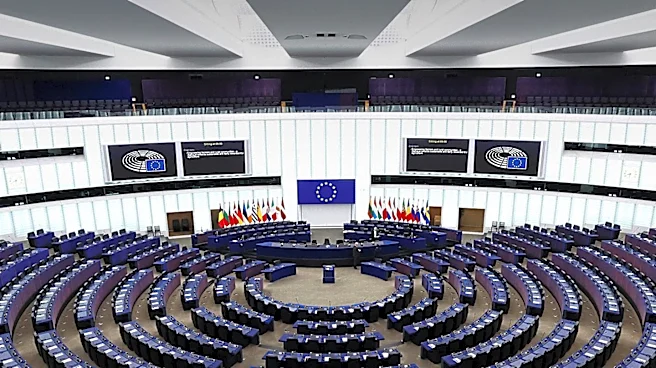
The proposed Quantum Act will now undergo examination by the European Parliament and the Council of the EU under the ordinary legislative procedure. Both institutions will adopt their positions and then negotiate a final text, a process that can be lengthy. The specific rules and implementation timeline will depend on the adopted text. The Sovereign Tech Equity Fund's financial resources are contingent on the negotiation of the 2028-2034 EU budget, a separate legislative process. The Commission aims for the STEF to be operational by the start of this next budget cycle. Additionally, the technical requirements for post-quantum cryptography, including what constitutes 'quantum-safe,' will be defined later through implementing acts by the Commission. This phased approach means that while the strategic direction is set, the practical implications and detailed compliance requirements for businesses will evolve over time.
Beyond the Headlines
The EU's Quantum Act and the proposed Sovereign Tech Equity Fund represent a deeper strategic shift towards technological self-reliance and economic security within Europe. This initiative extends beyond quantum technology, with the STEF potentially investing across the entire AI stack, including areas relevant to digital marketing infrastructure. The emphasis on 'tech sovereignty' highlights a growing concern within the EU regarding data control, supply chain resilience, and the ability to translate research into industrial capacity. This could lead to increased scrutiny of U.S. tech companies' operations in Europe, particularly concerning data access and security. The push for post-quantum cryptography also underscores a proactive approach to future cybersecurity threats, potentially setting a global precedent for encryption standards. This could trigger a broader re-evaluation of cryptographic practices across industries, impacting how data is secured and transmitted globally, and potentially creating new market opportunities for companies specializing in advanced cybersecurity solutions.