




What's Happening?
GSK has broadened its partnership with Chai Discovery, an AI company specializing in predicting and reprogramming biochemical molecule interactions. This expansion follows successful initial collaborations where Chai Discovery's molecular designs yielded
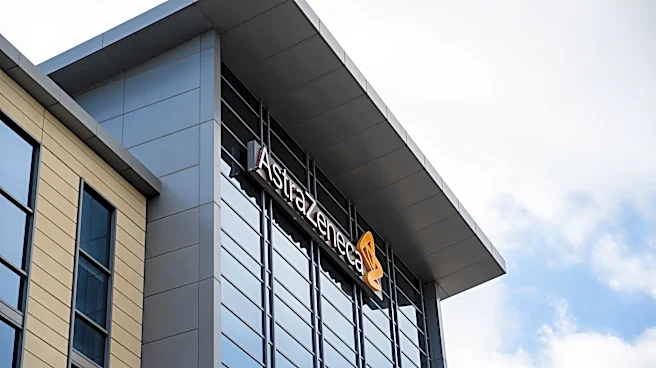
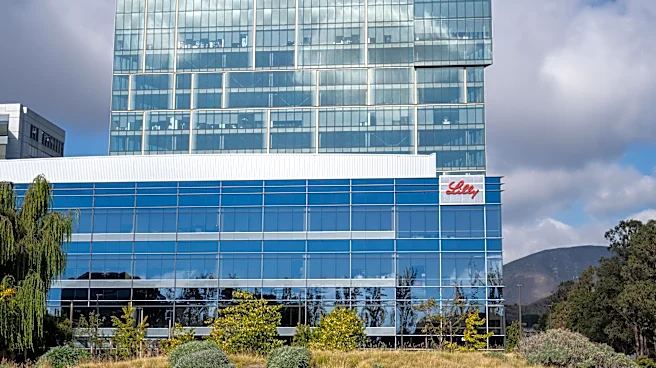
binders for every tested target. The new agreement grants GSK access to Chai Discovery's advanced protein-folding and design models, which will be integrated into GSK's drug development pipeline alongside its internal experimental data models. Chai Discovery's technology generates molecular designs without requiring target-specific training, indicating a significant advancement in AI-driven drug discovery. Similar agreements are also in progress with other major pharmaceutical companies, including AstraZeneca, Takeda, and Eli Lilly and Company, highlighting a growing trend in the pharmaceutical industry to leverage AI for accelerated drug development.
Why It's Important?
This expanded collaboration signifies a critical shift in the pharmaceutical industry towards integrating artificial intelligence into core drug discovery processes. For GSK, gaining access to Chai Discovery's protein-folding and design models could substantially accelerate the identification and development of new drug candidates, potentially reducing the time and cost associated with traditional drug discovery methods. The ability of Chai Discovery's AI to generate molecular designs without target-specific training suggests a more efficient and versatile approach to drug development, which could lead to breakthroughs in treating various diseases. This trend also indicates a broader industry recognition of AI's potential to revolutionize drug development, making it a key competitive advantage for pharmaceutical companies that successfully adopt these technologies. The involvement of multiple major pharmaceutical players underscores the perceived value and transformative potential of AI in this sector.
What's Next?
The continued integration of Chai Discovery's AI models into GSK's pipeline is expected to lead to the identification of new drug candidates and potentially faster progression through preclinical and clinical trials. As similar agreements are underway with AstraZeneca, Takeda, and Eli Lilly, the pharmaceutical industry is likely to see a rapid acceleration in AI adoption for drug discovery. This could result in a more efficient and cost-effective development process for new medicines. The success of these collaborations will likely encourage further investment in AI companies specializing in biotechnology and drug discovery, fostering innovation and competition in the sector. Future developments may include the expansion of AI applications to other stages of drug development, such as clinical trial design and patient selection.
Beyond the Headlines
The deeper implications of this collaboration extend to the ethical and regulatory frameworks surrounding AI in healthcare. As AI plays an increasingly central role in drug discovery, questions about data privacy, algorithmic bias, and the validation of AI-generated insights will become more prominent. The ability of AI to design novel molecules also raises intellectual property considerations and the potential for rapid innovation to outpace traditional patenting processes. Furthermore, the reliance on AI could lead to a shift in the skill sets required within pharmaceutical research, emphasizing computational biology and data science expertise. This technological advancement could ultimately democratize drug discovery by making it more accessible and efficient, but it also necessitates careful consideration of its societal impact and the responsible deployment of AI in such a critical field.