










What's Happening?
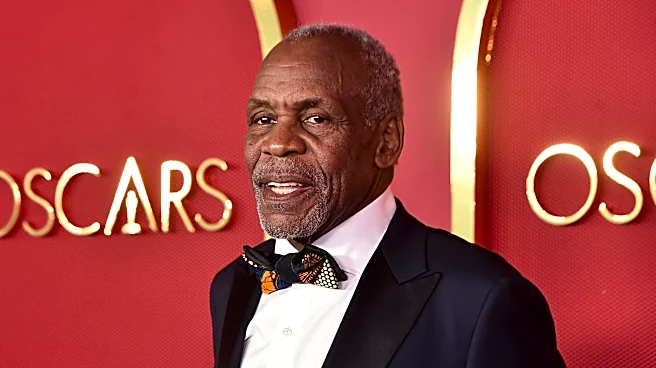
Danny Glover, renowned for his role in the 'Lethal Weapon' series, has publicly revealed his diagnosis with Alzheimer's disease. In an interview with NBC's Lester Holt, Glover, aged 79, shared that he has been living with the disease for several years,
which has affected his speech, movement, and memory. Despite the challenges, Glover expressed a sense of acceptance, acknowledging that the progression of the disease will bring changes. His daughter, Mandisa, noted that the diagnosis has altered his sense of identity, though Glover remains determined to continue his work and life. The actor, who will turn 80 on July 22, has been a prominent figure in Hollywood, with a career spanning roles in films like 'Predator 2' and 'The Color Purple'. He has also been recognized for his humanitarian efforts, receiving the Jean Hersholt Humanitarian Award in 2022.
Why It's Important?
Glover's announcement brings attention to Alzheimer's disease, a condition affecting nearly 7 million Americans aged 65 and older. His openness about living with the disease highlights the personal and societal challenges associated with Alzheimer's, including the impact on memory and daily functioning. Glover's story may inspire increased awareness and support for those affected by dementia, as well as their families. His continued engagement in public life and advocacy work underscores the potential for individuals with Alzheimer's to contribute meaningfully to society, challenging stereotypes about the disease. Glover's influence as a public figure could also drive further research and funding towards finding a cure or better treatments for Alzheimer's.
What's Next?
As Glover continues to navigate his diagnosis, he may become an advocate for Alzheimer's awareness and research, leveraging his platform to support initiatives aimed at combating the disease. His ongoing work and public appearances could serve as a source of inspiration for others facing similar challenges. The entertainment industry and his fans may rally around him, offering support and raising awareness about the realities of living with Alzheimer's. Additionally, Glover's experience may prompt discussions about the need for improved healthcare and support systems for aging populations, particularly those dealing with dementia.