






What's Happening?
Unilever has reported strong volume-led growth in its second-quarter results, driven primarily by its performance in emerging markets. The company's Power Brands, which include Hellmann’s, Horlicks, and Knorr, contributed significantly to this growth.
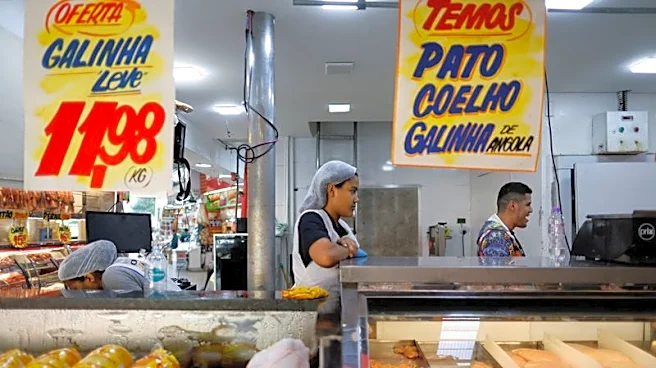
Unilever's Foods segment, however, presented a mixed picture, with modest volume-led growth and a decline in underlying operating profit due to food inflation pressures. The company noted strong momentum for Hellmann’s in Brazil and Asia Pacific Africa, which helped offset challenges in developed markets like the US, where increased competition in condiments has been noted. Unilever expects Foods growth to accelerate in the second half of the year, driven by innovation and improved performance in developed markets.
Why It's Important?
Unilever's performance underscores the importance of emerging markets in driving growth for multinational companies. The strong results from regions like Brazil and Asia Pacific Africa highlight the potential for expansion in these areas, especially for established brands like Hellmann’s. However, the challenges faced in developed markets, particularly in the US, indicate the competitive pressures and market saturation that can impact growth. Unilever's strategy to focus on innovation and commodity-driven price increases suggests a proactive approach to maintaining its market position amidst these challenges.
What's Next?
Unilever plans to continue reshaping its portfolio through acquisitions and disposals, aiming to enhance its focus on high-performing segments. The company is also working on a strategic tie-up with McCormick, which is expected to unlock significant value and strengthen its position in the flavor market. As Unilever navigates the competitive landscape, its emphasis on innovation and market-specific strategies will be crucial in sustaining growth and addressing the challenges in developed markets.