









What's Happening?
BrainCo, a startup based in Hangzhou, China, is focusing on non-invasive brain-computer interfaces (BCI) as an alternative to invasive methods like those used by Elon Musk's Neuralink. BCIs establish a direct link between human minds and devices, allowing
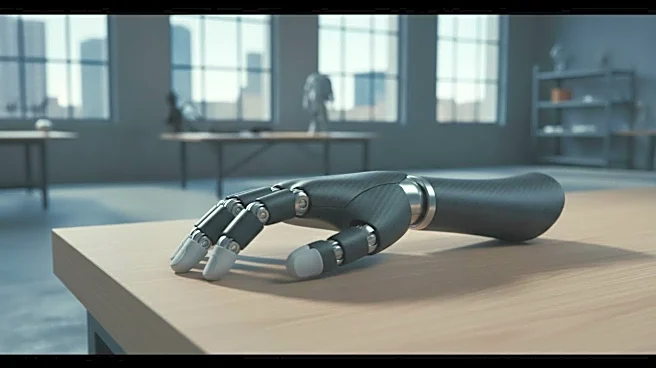
control through thought. While Neuralink uses implants to assist individuals with disabilities, BrainCo is developing wearable devices that process brain signals without surgery. The company has created bionic hands that translate neural signals into movements and wearables that aid sleep through electrical pulses. BrainCo's approach is gaining traction as it offers a less risky and more accessible solution compared to surgical implants. The Chinese government has identified BCI as a strategic industry, supporting its development through national policies and partnerships. BrainCo plans to expand its technology from medical applications to consumer electronics, eventually licensing its platform to other companies.
Why It's Important?
The development of non-invasive BCIs by companies like BrainCo is significant in the context of the U.S.-China tech rivalry. As both countries invest in neurotechnology, the race to commercialize BCI applications could impact global tech leadership. Non-invasive methods offer a safer and more cost-effective alternative to implants, potentially broadening the market for BCI technology. This could lead to advancements in medical treatments for conditions like ADHD and depression, as well as consumer products that enhance human capabilities. The Chinese government's support for BCI development highlights its strategic importance, potentially giving China an edge in this emerging field. For the U.S., maintaining competitiveness in BCI technology could influence its position in the global tech landscape.
What's Next?
BrainCo plans to continue developing its non-invasive BCI technology, starting with medical applications for amputees and expanding to other conditions. The company aims to enter the consumer electronics market, offering products that enhance human capabilities. As the industry grows, investment in BCI technology is expected to increase, potentially leading to new applications and market opportunities. The Chinese government's support for BCI development may accelerate progress, with potential implications for global tech competition. In the U.S., companies may need to innovate and invest in BCI technology to remain competitive. The success of non-invasive BCIs could influence regulatory approaches and consumer acceptance, shaping the future of neurotechnology.
Beyond the Headlines
The ethical and cultural implications of BCI technology are significant. As BCIs become more prevalent, questions about privacy, data security, and the potential for misuse will arise. The ability to control devices with thought could lead to new forms of interaction and communication, but also raises concerns about autonomy and consent. The integration of BCIs into everyday life may challenge existing norms and require new regulatory frameworks. Additionally, the geopolitical implications of BCI development could affect international relations, as countries vie for leadership in this transformative technology. The balance between innovation and ethical considerations will be crucial as BCIs move from sci-fi to reality.