


What's Happening?
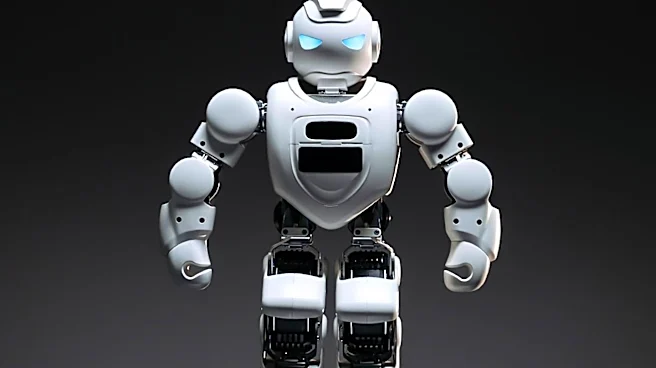
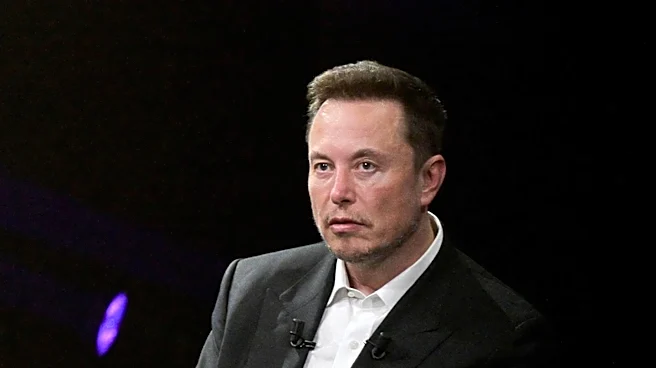
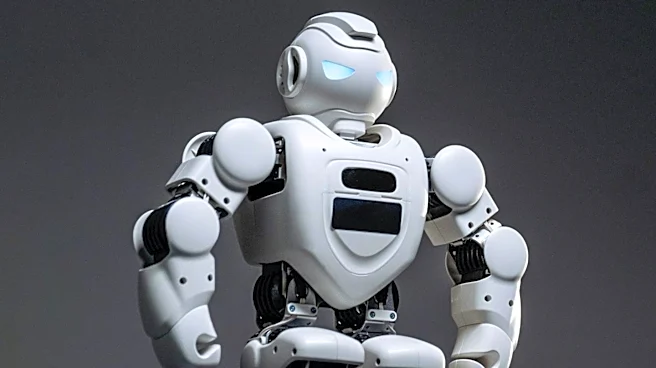
Tesla, led by Elon Musk, is focusing on developing a humanoid robot named Optimus, which Musk claims could become the company's most significant product. The robot is envisioned to perform tasks in factories, homes, and even build more robots. However,
Tesla has yet to demonstrate that Optimus can autonomously navigate and perform useful tasks. The company plans to start production of its third-generation robot in Fremont, California, but faces competition from other companies like Agility Robotics and Figure AI. Despite the ambitious vision, experts like Guy Hoffman from Cornell University express skepticism about the near-term viability of humanoid robots, citing the complexity of developing fully autonomous machines.
Why It's Important?
The development of Optimus represents a significant shift in Tesla's business strategy, potentially impacting the future of labor and automation. If successful, Optimus could revolutionize industries by reducing the need for human labor, leading to economic and societal changes. However, the challenges in creating a functional humanoid robot highlight the technological and logistical hurdles that Tesla must overcome. The success or failure of Optimus could influence investor confidence and Tesla's market position, as well as set a precedent for the future of robotics and AI integration in everyday life.
What's Next?
Tesla plans to begin production of Optimus soon, with a focus on refining the robot's capabilities through its 'Optimus Academy.' The company aims to address three main challenges: developing intelligence for navigation, creating dexterous hands, and scaling up mass production. The timeline for achieving these goals remains uncertain, and Tesla's ability to solve these issues will determine the robot's future. Stakeholders, including investors and competitors, will closely watch Tesla's progress, as it could redefine the landscape of robotics and automation.