








What's Happening?
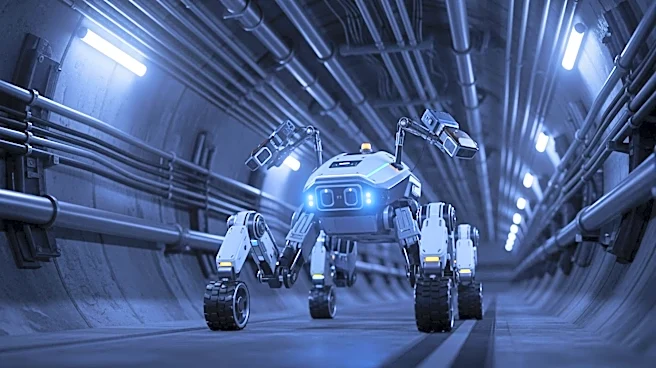
DEEP Robotics has introduced the Lynx M20, an autonomous robot designed to navigate and monitor utility tunnels beneath urban areas. These tunnels, which house essential infrastructure like power cables and water lines, have traditionally been maintained
by human workers, who face significant risks such as toxic gas leaks and electrical hazards. The Lynx M20, equipped with advanced sensors and AI, can autonomously patrol these environments, detecting issues that human senses might miss. It combines wheeled and legged mobility to traverse various terrains, ensuring comprehensive coverage of these critical areas. The robot's ability to operate continuously and return to its charging dock autonomously enhances its efficiency and safety.
Why It's Important?
The deployment of the Lynx M20 represents a significant advancement in urban infrastructure management. By replacing human workers in hazardous environments, it reduces the risk of accidents and improves the reliability of essential services. The robot's advanced sensing capabilities allow for early detection of potential issues, providing maintenance teams with valuable time to address problems before they escalate. This shift from manual to automated monitoring is crucial as cities expand and the demand for reliable infrastructure grows. The technology not only enhances safety but also increases operational efficiency, potentially leading to cost savings and improved service delivery.
What's Next?
As the Lynx M20 continues to prove its effectiveness, it is likely to see wider adoption in cities worldwide. The increasing investment in underground infrastructure will drive demand for such automated solutions, making them a standard part of urban planning and maintenance. DEEP Robotics may expand its technology to cover more complex environments and integrate additional features to further enhance its capabilities. The success of the Lynx M20 could also inspire other companies to develop similar technologies, fostering innovation in the field of urban infrastructure management.
Beyond the Headlines
The introduction of robots like the Lynx M20 raises important questions about the future of work and the role of automation in society. While these technologies improve safety and efficiency, they also challenge traditional labor models, potentially displacing workers who have traditionally performed these tasks. This shift necessitates a broader discussion on workforce retraining and the ethical implications of automation. Additionally, the reliance on advanced technology for critical infrastructure management underscores the need for robust cybersecurity measures to protect these systems from potential threats.