







What's Happening?
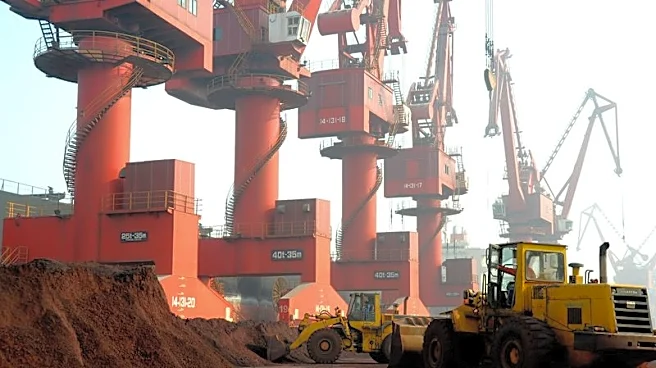
Rio Tinto has decided not to take over operations of the Kasiya Rutile-Graphite Project in Malawi, allowing Sovereign Metals to pursue a U.S.-focused strategy. The Kasiya project is one of the world's largest undeveloped deposits of natural rutile and
graphite, both critical minerals for various industries. Rio Tinto's decision aligns with its strategic focus on other minerals like iron ore and lithium. Despite stepping back, Rio Tinto remains a significant shareholder in Sovereign Metals, retaining an 18.2% stake. Sovereign Metals plans to accelerate its commercial strategy towards the U.S., aiming to supply these critical minerals to Western markets seeking alternatives to Chinese sources.
Why It's Important?
The Kasiya project holds significant strategic value due to its large deposits of rutile and graphite, which are essential for industries such as aerospace, defense, and electric vehicles. The U.S. and EU have designated these minerals as critical, emphasizing the need to diversify supply chains away from China. Sovereign Metals' focus on the U.S. market could strengthen supply chain resilience and support Western efforts to secure critical mineral resources. This development also highlights the shifting dynamics in global mineral supply chains, with companies and governments seeking to reduce dependency on Chinese sources.
What's Next?
Sovereign Metals will likely engage with U.S. government agencies, development finance institutions, and industry partners to solidify its market position. The company aims to convert existing agreements with partners like Mitsui & Co. and Traxys North America into binding contracts. Additionally, collaboration with the International Finance Corporation could provide financial support and attract international investors. The project's success could influence future investments in critical mineral projects and shape strategies for securing essential resources in the face of geopolitical tensions.