





What's Happening?
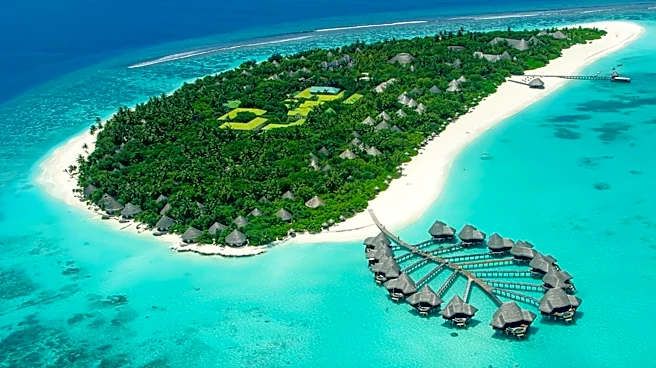
JA Manafaru, a private island resort in the Maldives, is highlighted for its distinct brand of 'quiet luxury' and exceptional service. The resort, located in the Haa Alif atoll, spans approximately 35 acres and features 84 villas and residences, six restaurants
and bars, and its own house reef. It emphasizes a balance of all-inclusive luxury with stillness and serenity, aiming to make guests feel as though the island is almost entirely their own. The resort showcases Maldivian culture through local cuisine, using fresh, island-sourced ingredients like tuna, coconut, and chili. Accommodation options include overwater villas with direct ocean access and beachside villas, some with private pools. Services include a concierge via WhatsApp and complimentary activities such as snorkeling, spa treatments, and various sports.
Why It's Important?
The resort's focus on 'quiet luxury' reflects a growing trend in the high-end travel market, particularly among U.S. consumers seeking exclusive, authentic, and less ostentatious experiences. This approach prioritizes privacy, personalized service, and cultural immersion over overt displays of wealth, appealing to a demographic that values discretion and genuine relaxation. For the U.S. travel industry, this indicates a demand for destinations and resorts that offer unique, tailored experiences rather than standardized luxury. It also highlights the increasing importance of sustainability and local culture in travel choices, as JA Manafaru integrates Maldivian traditions and local ingredients into its offerings. This trend could influence how other luxury resorts market themselves and design their guest experiences to cater to this evolving preference.
What's Next?
The success of resorts like JA Manafaru may encourage other luxury travel destinations to adopt similar 'quiet luxury' models, focusing on bespoke services, cultural authenticity, and environmental integration. There could be an increased investment in personalized guest experiences, such as dedicated concierges and unique local activities. The emphasis on privacy and serenity might also lead to the development of more secluded and exclusive resort concepts. Furthermore, as travelers become more conscious of their impact, resorts that highlight local sourcing and cultural preservation, like JA Manafaru, are likely to gain a competitive edge. This could also drive innovation in sustainable tourism practices within the luxury sector.
Beyond the Headlines
The 'quiet luxury' trend in travel extends beyond mere aesthetics; it represents a deeper desire for meaningful experiences and a respite from the constant connectivity of modern life. It speaks to a yearning for genuine connection with nature and local culture, rather than just opulent surroundings. Ethically, this approach can promote more responsible tourism, encouraging resorts to support local communities and preserve natural environments. Culturally, it fosters a greater appreciation for the unique heritage of destinations, moving away from a homogenized global tourism experience. This shift could ultimately lead to a more sustainable and enriching travel landscape, where the value of an experience is measured by its authenticity and positive impact, rather than its price tag or public visibility.