








What's Happening?
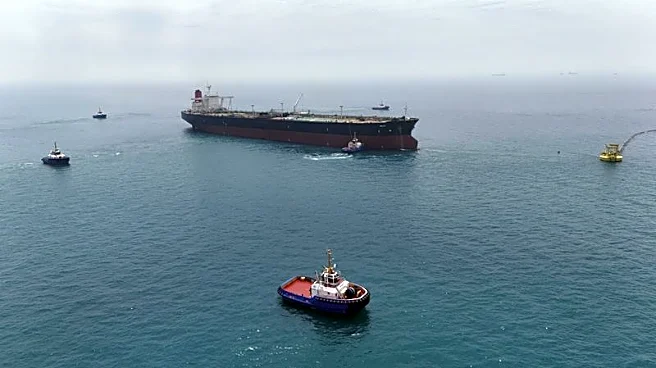
Oil prices have fallen to levels not seen since before the Iran war, following the reopening of the Strait of Hormuz. Brent crude briefly dipped below $72.48 per barrel, reflecting increased ship traffic through the strait. This development is part of a broader
easing of tensions after a U.S.-Iran memorandum of understanding. Despite the drop in crude prices, U.S. gas prices remain high, prompting President Trump to call for an investigation into potential overcharging by major oil companies. Experts note that there is a lag between changes in crude oil prices and their impact on gasoline prices due to the complexity of the supply chain.
Why It's Important?
The decrease in oil prices is significant for both global markets and domestic consumers, as it could lead to lower costs for transportation and goods. However, the slow response of gasoline prices to changes in crude oil prices highlights the challenges in the energy supply chain. The investigation ordered by President Trump underscores the political pressure to address high consumer costs, which could influence policy decisions and regulatory actions. The situation also reflects the broader geopolitical dynamics affecting energy markets, with potential implications for international relations and economic stability.
What's Next?
As the investigation into oil pricing practices unfolds, there may be increased regulatory scrutiny on the energy sector. The outcome could lead to changes in how gasoline prices are set and monitored, potentially affecting consumer costs and industry practices. Additionally, the geopolitical situation in the Middle East remains a key factor in determining future oil prices and market stability. Stakeholders will need to navigate these uncertainties while balancing economic and political considerations.