








What's Happening?
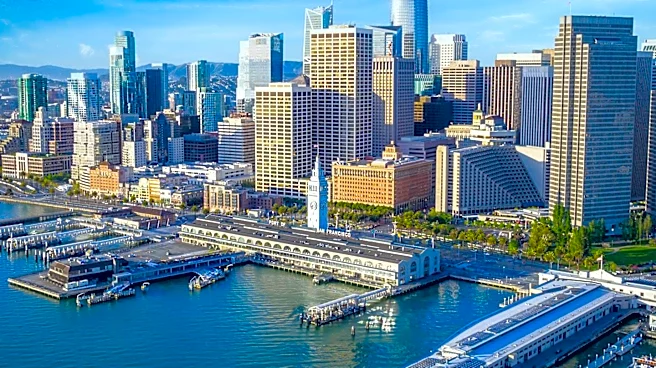
San Francisco is experiencing a significant concentration of AI firms, which is driving demand for office space despite high vacancy rates. According to a report by CBRE, AI companies leased over 800,000 square feet of office space in the first half of 2025,
with three-quarters of these leases being new rather than renewals. This trend is occurring even as remote work stabilizes at about 21% of paid workdays, as per a Stanford and Federal Reserve Bank of Atlanta survey. The city, which saw office vacancy rates climb past 36% during the pandemic, is now witnessing a resurgence in office space demand, particularly from AI firms. This demand is concentrated in San Francisco and Silicon Valley, which remain central to the AI boom.
Why It's Important?
The concentration of AI firms in San Francisco highlights the city's continued importance as a tech hub, despite the challenges posed by remote work and high vacancy rates. This trend underscores the resilience of the tech sector and its ability to drive economic activity and office space demand. The influx of AI companies could lead to increased job opportunities and economic growth in the region. However, it also raises questions about the sustainability of such concentration and the potential impact on housing and infrastructure. The city's attempt to address these issues through taxation, such as the proposed tax on stock-based compensation, reflects ongoing efforts to balance economic growth with social equity.
What's Next?
As AI firms continue to expand in San Francisco, the city may need to address the challenges of accommodating this growth, including potential strains on housing and infrastructure. Policymakers might consider revisiting taxation and regulatory measures to ensure that the benefits of tech-driven growth are equitably distributed. Additionally, the ongoing demand for office space could influence future urban planning and development strategies, potentially leading to more mixed-use developments and innovative solutions to manage high vacancy rates.
Beyond the Headlines
The concentration of AI firms in San Francisco could have broader implications for the tech industry's geographic distribution. While remote work was expected to decentralize tech jobs, the physical clustering of AI companies suggests that certain sectors may still gravitate towards established tech hubs. This trend could influence future investment and development patterns, as well as the competitive landscape for tech talent. Moreover, the city's experience may serve as a case study for other regions seeking to attract and retain high-growth industries.