




What's Happening?
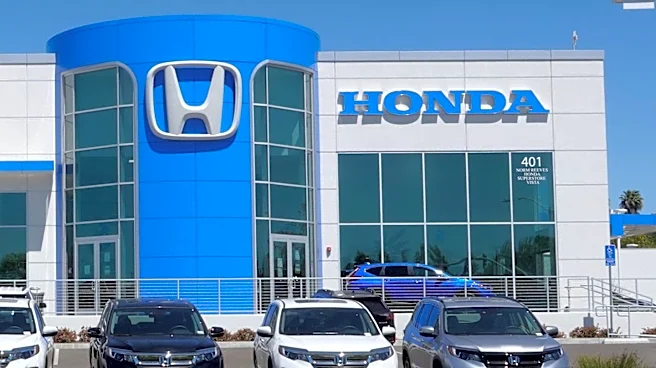
Honda's global executive vice president, Noriya Kaihara, has indicated that the company may scrap plans for an eighth assembly plant in North America if the USMCA trade agreement is not extended. This statement, made during a roundtable discussion in Washington,
echoes earlier comments from CEO Toshihiro Mibe, who noted that Honda has reached its maximum production capacity to meet regional demand and is considering a new U.S. plant. However, Kaihara emphasized that a decision on the new plant, intended to be operational by 2030, would need to be made within one to two years, and its feasibility is contingent on the continuation of USMCA. Currently, Honda is not passing on tariff costs to North American consumers.
Why It's Important?
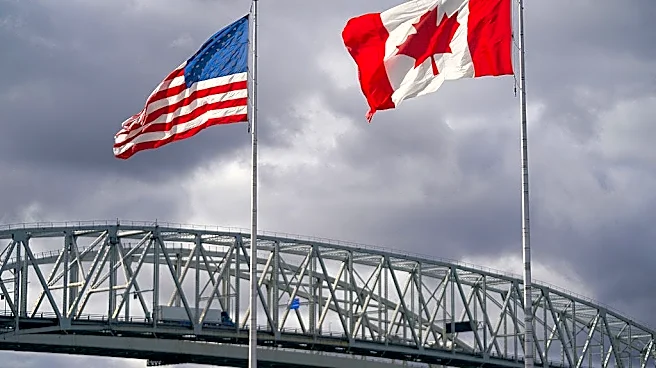
The potential halt of Honda's new North American assembly plant underscores the significant impact of trade policy on automotive manufacturing and investment in the U.S. and the broader North American region. The USMCA agreement, which replaced NAFTA, is crucial for automakers like Honda that have established complex supply chains across the U.S., Canada, and Mexico. Uncertainty surrounding its extension directly affects long-term investment decisions, potentially leading to reduced manufacturing capacity and job creation in the U.S. The automotive industry relies on stable trade frameworks to optimize production and manage costs, and any disruption could lead to higher operational expenses, which might eventually be passed on to consumers or result in a shift of production away from the region. This situation highlights how trade agreements are not merely political documents but direct determinants of economic activity and industrial growth.
What's Next?
Honda will need to make a definitive decision regarding its eighth North American assembly plant within the next one to two years to ensure it can be operational by 2030. This timeline places pressure on ongoing discussions and negotiations surrounding the USMCA trade agreement. The outcome of these trade talks will be a critical factor in Honda's investment strategy. Should the USMCA not be extended, Honda may "change course," potentially re-evaluating its North American manufacturing footprint and investment priorities. This could involve diverting planned investments to other regions or adjusting its production strategy to mitigate the impact of potential tariffs or trade barriers. The situation also suggests that other automakers with significant North American operations may face similar dilemmas, prompting them to closely monitor trade policy developments.
Beyond the Headlines
The uncertainty surrounding Honda's investment plans due to the USMCA's future highlights a broader trend of how geopolitical and trade policies can influence global manufacturing strategies. Automakers, traditionally reliant on integrated supply chains and predictable trade environments, are increasingly navigating a landscape marked by protectionist sentiments and fluctuating trade agreements. This situation could lead to a re-evaluation of global production hubs, potentially favoring regions with more stable and favorable trade conditions. For the U.S., it underscores the delicate balance between using trade policy as a leverage tool and ensuring a conducive environment for foreign direct investment, which is vital for economic growth and technological advancement in sectors like automotive manufacturing. The long-term implications could include a more fragmented global automotive supply chain and increased pressure on governments to provide clear, consistent trade policies.