



What's Happening?
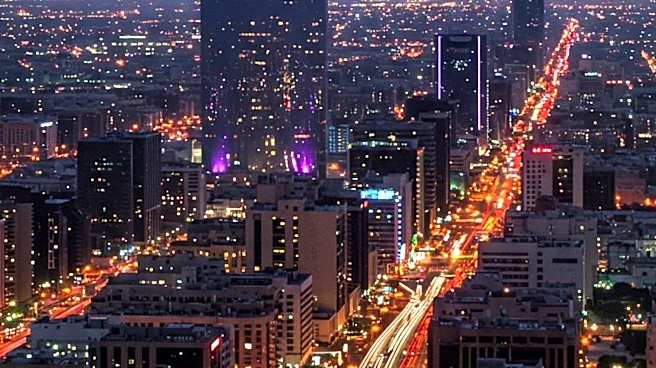
A skyscraper in Riyadh, housing the headquarters of Saudi Arabia’s sovereign wealth fund, the Public Investment Fund Tower, sustained damage on Thursday. The 80-story building, the tallest in the city’s financial district, had its facade damaged across
several floors with windows blown out. This incident occurred as Saudi Arabia reported new attacks by Yemen’s Houthi rebels. The Saudi-led military coalition fighting the Houthis stated it had 'addressed a missile threat launched by the terrorist Houthi militia towards Riyadh,' with initial assessments indicating debris impact. This attack follows previous incidents, including damage to an Aramco building in the same financial district earlier this month. The ongoing Houthi attacks have led to the closure of offices in Riyadh's King Abdullah Financial District (KAFD) for several weeks, with some businesses not expecting a reopening until next year. Consequently, an increasing number of foreign executives are leaving Riyadh, opting to work from other countries due to the persistent insecurity and disruption to daily life, including school closures and shifts to online learning.
Why It's Important?
The damage to a prominent financial district skyscraper and the subsequent departure of expatriates pose a significant challenge to Saudi Arabia's ambitions of establishing Riyadh as a leading regional business and finance hub. The kingdom had aimed to increase Riyadh's population to 10 million by 2030, a goal heavily reliant on attracting expatriates. The current sense of insecurity directly undermines this objective, as foreign executives and their families are choosing to relocate. This exodus could impact foreign investment, the operational continuity of multinational corporations with a presence in Riyadh, and the overall economic growth trajectory of the city. The prolonged conflict with the Houthis, which Saudi officials anticipate will extend into next year, suggests that these disruptions may continue, potentially leading to a sustained negative impact on Riyadh's economic development and its appeal as an international business destination.
What's Next?
Saudi Arabian officials anticipate the conflict with Yemen's Houthis will continue well into next year, suggesting that the security situation in Riyadh may not improve in the short term. This prolonged conflict could lead to further disruptions in the city, potentially delaying the reopening of the King Abdullah Financial District and other business areas. The continued threat of Houthi attacks may prompt more expatriates to leave Riyadh, further impacting the city's demographic and economic goals. Businesses operating in the region may need to reassess their operational strategies, including remote work policies and potential relocation of staff. The Saudi government will likely continue its military operations against the Houthis while also working to mitigate the impact of these attacks on civilian life and economic activity, though the immediate outlook points to ongoing instability.
Beyond the Headlines
The ongoing Houthi attacks on Riyadh and the resulting expatriate exodus highlight deeper geopolitical tensions and their tangible economic and social consequences. Beyond the immediate damage and business disruptions, the situation reflects the broader instability in the Middle East and the vulnerability of even well-developed urban centers to asymmetric warfare. The decision by foreign executives to leave, even temporarily, signals a shift in perception regarding the safety and stability of Riyadh, which could have long-term implications for its global competitiveness. This situation also underscores the complex interplay between regional conflicts, national development ambitions, and the confidence of the international business community, demonstrating how security concerns can directly impede economic diversification and growth strategies in a globalized world.