



What's Happening?
Ferrari N.V. (NYSE: RACE), the luxury sports car manufacturer known for its operations in Maranello, Italy, and its involvement in Formula 1 as Scuderia Ferrari, has announced that its shares are now available as tokenized assets on the Solana blockchain.
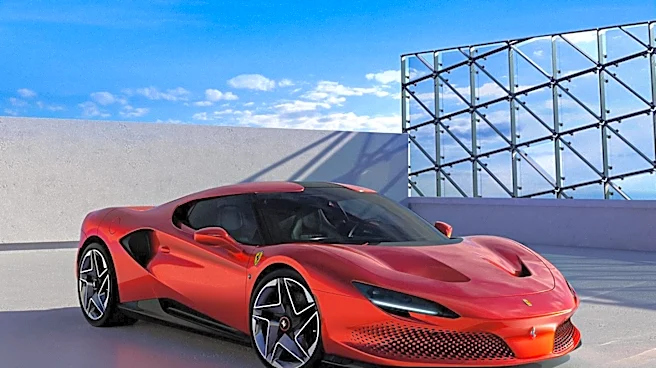
Each token, designated as $RACE, is tradable 24/7 and can be redeemed 1:1 for a traditional share of Ferrari (NYSE: RACE) through Backpack Securities. This development extends Ferrari's tradition of innovation into the digital asset space. The company, which was spun out of Fiat Chrysler Automobiles and listed in 2015, is registered in the Netherlands as a Dutch N.V. Ferrari's product range includes models such as the 12Cilindri, 296, 849 Testarossa, and Amalfi, and it continues to innovate with initiatives like Ferrari Luce, which aims to introduce new archetypes into its history, particularly in the electric era. The tokenization of its shares represents a significant step in making its equity more accessible to a broader range of investors.
Why It's Important?
The tokenization of Ferrari N.V. shares on the Solana blockchain through Backpack Securities marks a significant evolution in how traditional equities can be traded and owned. This move could democratize access to high-value stocks like Ferrari, allowing a wider array of investors to participate in the market without the traditional barriers of conventional stock exchanges. The 24/7 tradability of $RACE tokens offers enhanced liquidity and flexibility, potentially attracting a new demographic of investors who are accustomed to the continuous nature of cryptocurrency markets. For the U.S. financial industry, this could set a precedent for other publicly traded companies to explore similar tokenization strategies, blurring the lines between traditional finance and decentralized finance (DeFi). It also highlights the growing influence of blockchain technology in mainstream financial markets, potentially leading to increased adoption of digital assets and new regulatory considerations for tokenized securities. This innovation could also impact the perception of luxury brands in the digital age, demonstrating a forward-thinking approach to investment and ownership.
What's Next?
The introduction of tokenized Ferrari shares on Solana could pave the way for other major U.S. and international companies to explore similar blockchain-based investment opportunities. We can anticipate increased scrutiny from financial regulators regarding the classification and oversight of these tokenized assets, potentially leading to new guidelines or frameworks for digital securities. The success of $RACE tokens will likely be closely watched by both traditional financial institutions and the crypto community, influencing future investment strategies and product offerings. Backpack Securities may see increased demand for its services as more companies consider tokenizing their assets. Furthermore, this development could spur innovation in the broader blockchain ecosystem, leading to the creation of more sophisticated platforms and tools for managing tokenized equities. Investors will be monitoring the liquidity and price stability of $RACE tokens, as well as the ease of redemption for traditional shares, to assess the viability and long-term impact of this new investment model.
Beyond the Headlines
This move by Ferrari N.V. transcends a simple financial transaction; it represents a philosophical shift in how ownership and value are perceived in the digital age. By tokenizing its shares, Ferrari is not just offering a new investment vehicle but also embracing the principles of decentralization and accessibility that underpin blockchain technology. This could have profound implications for corporate governance and shareholder engagement, potentially allowing for more direct and transparent interactions between companies and their investors. Ethically, it raises questions about equitable access to investment opportunities and whether tokenization truly levels the playing field or introduces new forms of digital divide. Legally, the intersection of traditional securities law and blockchain technology will undoubtedly lead to complex challenges and opportunities for legal innovation. Culturally, it signifies a growing acceptance of digital assets within established industries, potentially accelerating the mainstream adoption of cryptocurrencies and blockchain technology beyond speculative trading, positioning them as integral components of the global financial infrastructure.