




What's Happening?
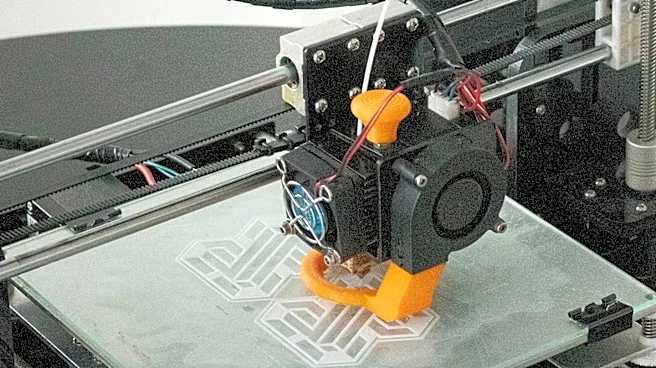
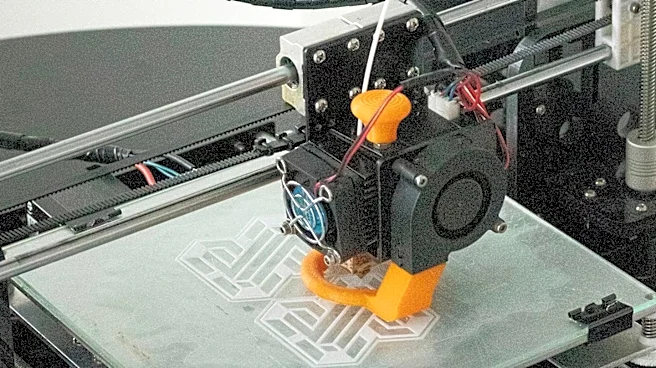
Hydra Manufacturing, a spin-out from the University of Leeds, is commercializing a ceramic 3D printer known as the Ceramic Hybrid Additive Manufacturing Platform (CHAMP). This technology integrates paste deposition, drying, machining, and inspection,
allowing the printer to identify and repair its own defects. According to Louis Masters, CEO of Hydra Manufacturing, the machine can cut back to a previous layer and re-print if a defect is detected, significantly reducing void content in reworked specimens by 68% compared to uncorrected ones. The research began at Loughborough and continued at Leeds, with an industrial sponsor initially funding the work. The company sold its first machine to Lucideon, a materials development company, shortly after its incorporation, following discussions that predated the company's official registration. This innovative approach aims to simplify the production of complex ceramic shapes using familiar materials and existing furnace equipment.
Why It's Important?
This advancement in ceramic 3D printing holds significant implications for U.S. industries, particularly those requiring high-performance ceramic components. Industries such as aerospace, medical, energy, defense, and electronics, which Hydra Manufacturing has already engaged with, stand to benefit from more efficient and reliable manufacturing processes. The ability of the CHAMP system to self-repair defects during printing can lead to reduced material waste, lower production costs, and improved product quality. For manufacturers, this means potentially faster turnaround times for complex parts, as the system can complete printing, drying, and sintering in a much shorter timeframe compared to traditional methods. The technology's focus on using existing materials and furnace schedules also lowers the barrier to adoption for companies already working with ceramics, making it a practical solution for enhancing current manufacturing capabilities and potentially fostering innovation in material science and engineering.
What's Next?
Hydra Manufacturing is actively seeking to expand its market reach, with prospective customers able to submit their own materials for printing trials. These trials assess material behavior and produce test coupons, potentially leading to larger development projects or machine orders. The company is also exploring rental options for its CHAMP system. Hydra Manufacturing plans to showcase its technology at Formnext, presenting samples of alumina, tungsten carbide, and hydroxyapatite, and demonstrating the machine's defect correction capabilities. Discussions at the event will include porous ceramics for casting and ceramics for extreme environments, with Lucideon sharing its experiences as an early adopter. The company is also in the final stages of qualifying its silicon carbide formulation, which Louis Masters views as particularly promising. These efforts aim to further validate the technology and attract new clients across various industrial sectors.
Beyond the Headlines
The development of self-repairing 3D printing technology, as demonstrated by Hydra Manufacturing, represents a significant step towards autonomous manufacturing systems. This innovation not only addresses immediate production challenges but also hints at a future where manufacturing processes are more resilient and less reliant on constant human intervention for quality control. The ethical implications revolve around the increasing automation of skilled tasks and the potential impact on the workforce, though it also creates new demands for specialized engineering and maintenance roles. Legally, the patent application for Hydra's extruder design highlights the ongoing intellectual property race in advanced manufacturing. Culturally, this technology could accelerate the adoption of additive manufacturing in sectors traditionally dominated by conventional methods, fostering a shift towards more customized and on-demand production, and potentially influencing supply chain dynamics by enabling localized manufacturing of complex components.