





What's Happening?
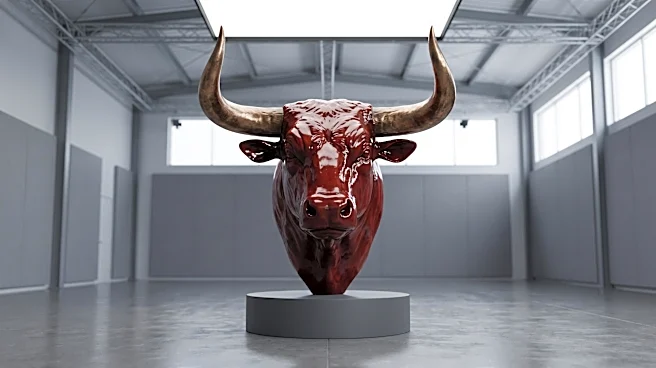
The Chinese animated film 'Niu Lai' (The Bull Comes), created by amateur director Xin Yumeng and his mother Sun Lifang, has achieved blockbuster status in China despite initially receiving scathing reviews for its low-quality CGI and baffling plot. The film,
made on a microbudget over five years, has grossed over 59 million yuan, making it the most profitable film of all time based on return-on-investment ratio. Its success is largely attributed to a 'hate-watching' phenomenon, where audiences are drawn to its perceived 'so bad, it's good' quality. Caelan Moriarty, a 25-year-old American musician working in China, commented on the film, noting the 'heart' put into its creation and expressing admiration for the creators' decision not to use AI, highlighting the time and effort invested. This sentiment suggests a growing appreciation for raw, human-made content in an era dominated by polished, AI-generated media.
Why It's Important?
The unexpected success of 'Niu Lai' and the comments from individuals like Caelan Moriarty highlight a potential shift in audience preferences, particularly in the context of increasing AI-generated content. Moriarty's appreciation for the film's human-made quality, despite its technical imperfections, suggests a burgeoning 'AI fatigue' among viewers. This phenomenon could influence the U.S. entertainment industry by encouraging a re-evaluation of production values and marketing strategies. While 'hate-watching' has historically driven viewership for certain American indie films and series, 'Niu Lai's' profitability based on this trend, coupled with a preference for authentic, non-AI content, could inspire U.S. independent filmmakers to embrace more raw, personal projects. It also raises questions about the long-term viability of AI-driven content in the U.S. market if audiences increasingly seek out human-centric creations, even those with lower production quality.
What's Next?
The success of 'Niu Lai' may prompt discussions within the U.S. film industry about the value of authenticity and human effort in filmmaking, potentially leading to a greater emphasis on independent, creator-driven projects. While it's unlikely to immediately alter mainstream Hollywood production, it could inspire a niche market for films that prioritize unique storytelling and genuine human touch over high-gloss perfection. Filmmakers and studios might explore how to leverage the 'no-filter' aesthetic that resonates with younger, social media-savvy audiences. Additionally, the conversation around 'AI fatigue' could intensify, leading to more explicit marketing of films as 'human-made' or 'AI-free' to appeal to this emerging preference. The long-term impact will depend on whether this trend of valuing raw, authentic content over polished, AI-generated media gains broader traction in the U.S. market.
Beyond the Headlines
The 'Niu Lai' phenomenon, as observed by an American musician in China, touches upon deeper cultural and ethical implications regarding the role of technology in creative industries. The film's success, despite its technical shortcomings, suggests a yearning for authenticity and human connection in an increasingly digital and AI-driven world. This could lead to a re-evaluation of what constitutes 'quality' in art and entertainment, shifting focus from technical perfection to genuine expression and effort. The ethical dimension arises from the potential for AI to democratize content creation while simultaneously diluting the perceived value of human artistry. The appreciation for 'Niu Lai's' human-made nature, as noted by Moriarty, could signify a broader societal shift towards valuing the 'process' and 'intent' behind creative works, rather than solely the polished final product. This could foster a counter-movement against the pervasive influence of AI in creative fields, emphasizing the irreplaceable value of human ingenuity and imperfection.