




What's Happening?
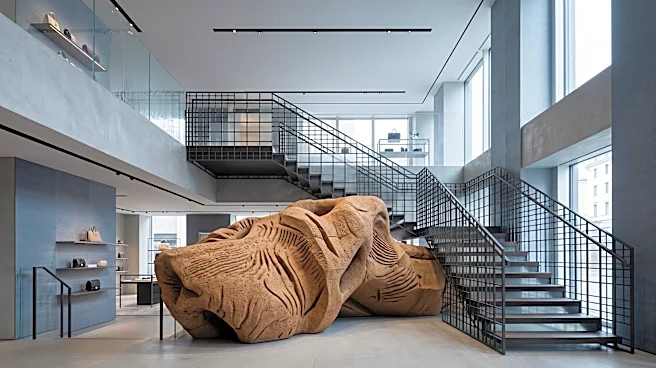
Stone Island has announced the reopening of its renovated and expanded flagship store in Milan, Italy, located at Corso Matteotti 18. The store, spanning 600 square meters across two levels, is designed to integrate product display with architecture and a dedicated
space for cultural exchange. This project represents a further evolution of Stone Island’s collaboration with OMA/AMO and Samir Bantal, Partner at OMA/AMO, focusing on translating the brand's material research and experimental approach into its retail environment. The flagship features a sculptural 'Hyperobject' made from carved cork, connecting different spaces and integrating functions like display niches and a staircase. An expanded staircase, constructed from a powder-coated metal grid filled with resin, also serves as a display area. The store incorporates various materials such as burnt, sandblasted, and coated cork, handmade fused glass, and pressed paper combined with recycled resin, reflecting Stone Island's commitment to material exploration.
Why It's Important?
The reopening of Stone Island's Milan flagship underscores a growing trend in retail where physical stores are evolving beyond mere points of sale to become immersive brand experiences and cultural hubs. For U.S. consumers and the fashion industry, this development highlights the increasing importance of experiential retail, where design, material innovation, and cultural programming are used to engage customers more deeply. This approach can influence how U.S. brands, particularly in the high-end and streetwear sectors, conceptualize their retail spaces, moving towards environments that foster community and discovery rather than just transactions. The emphasis on material research and collaboration with independent designers also signals a shift towards more sustainable and artisanal practices, potentially impacting supply chains and design philosophies within the U.S. fashion market. Brands that successfully integrate these elements can build stronger brand loyalty and differentiate themselves in a competitive global market.
What's Next?
Following the Milan flagship's reopening, Stone Island is likely to continue its strategy of integrating material research and cultural programming into its brand identity and future retail endeavors. This could involve similar expansions or renovations in other key global markets, potentially including the U.S., where the brand has a significant following. The success of this experiential retail model in Milan may serve as a blueprint for other fashion and lifestyle brands looking to enhance their physical presence. Furthermore, the collaborations with independent designers and creative studios could lead to more partnerships and curated experiences, influencing how brands engage with the creative community. The focus on unique materials and craftsmanship might also drive innovation in textile development and sustainable practices across the industry, with potential implications for manufacturing and design trends in the coming years.
Beyond the Headlines
The Stone Island Milan flagship's design, with its 'Hyperobject' and emphasis on material transformation, reflects a deeper philosophical shift in how brands perceive their physical spaces. It moves beyond traditional retail to create a 'modern alchemy,' as described by Samir Bantal, where ordinary materials are elevated into extraordinary experiences. This approach challenges the prevailing digital-first mindset by reasserting the value of the tangible and physical. Ethically, the focus on material research and craftsmanship can promote more sustainable production methods and support artisanal skills, counteracting fast fashion's environmental and social impacts. Culturally, by dedicating space for cultural exchange and collaborating with independent designers, Stone Island positions itself not just as a clothing brand but as a patron of design and creativity, fostering a community around shared values. This could inspire other brands to consider their broader cultural and ethical responsibilities beyond commercial objectives.