




What's Happening?
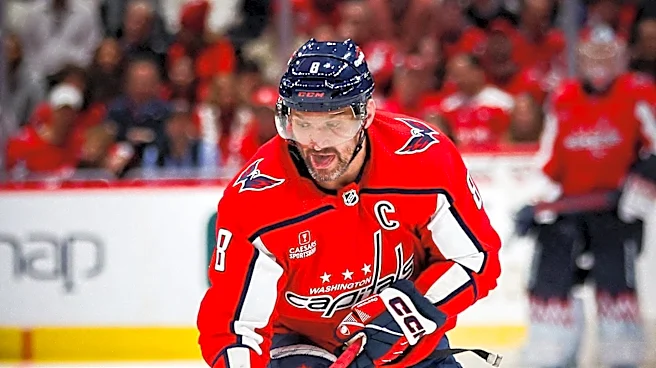
The NHL team Washington Capitals recently commenced its home season with a ceremonial event celebrating Alex Ovechkin's past NHL season. His sons, Sergej and Ilya, introduced their father to a sold-out Capital One Arena. However, the atmosphere outside
the stadium was disrupted by pro-Ukrainian demonstrators. Former Czech goaltender Dominik Hašek, a long-standing critic of Ovechkin's relationship with Russian President Vladimir Putin, intensified his criticism. Hašek directly appealed to the league's leadership, specifically mentioning Commissioner Gary Bettman and Capitals owner Ted Leonsis, in connection with Ovechkin's ties to Putin. This comes as several European hockey federations, including those from Slovakia, the Czech Republic, Finland, Germany, and Ukraine, have expressed strong disapproval and potential boycotts regarding a recent Court of Arbitration for Sport (CAS) decision that could allow Russian teams to participate in the 2027 IIHF World Championships.
Why It's Important?
This situation highlights the ongoing tension between sports and international politics, particularly concerning the conflict in Ukraine. For the Washington Capitals and the NHL, the controversy surrounding Alex Ovechkin's public association with President Putin creates a challenging public relations environment. Owner Ted Leonsis faces scrutiny as the team's star player is at the center of a geopolitical debate, potentially impacting fan sentiment and team image. The broader implications for U.S. sports involve navigating the complexities of international player relations and the expectations of a diverse fanbase, some of whom may strongly object to perceived endorsements of foreign leaders involved in conflicts. The potential for boycotts by European teams could also affect the global appeal and integrity of international hockey tournaments, indirectly influencing the NHL's international standing and player recruitment.
What's Next?
The immediate future will likely see continued pressure on the NHL and the Washington Capitals to address the concerns raised by critics like Dominik Hašek and pro-Ukrainian demonstrators. The reactions of European hockey federations to the CAS decision will be crucial, as potential boycotts of the 2027 IIHF World Championships could escalate the issue. The Czech Ice Hockey Association, for instance, is analyzing the practical and legal consequences of the CAS ruling and has not ruled out a boycott if Russia participates. The German Ice Hockey Federation has also stated its unchanged opposition to Russia's return, citing significant security, political, and economic consequences for Germany as a host nation. These developments could force the NHL and its teams to re-evaluate their policies regarding players' political affiliations and public statements, especially those with international implications.
Beyond the Headlines
The controversy surrounding Alex Ovechkin and the Washington Capitals extends beyond mere sports, touching upon ethical considerations of athlete responsibility and the role of sports organizations in global political discourse. The situation forces a deeper examination of whether athletes, particularly those with significant public platforms, should be held accountable for their political associations, especially when those associations are linked to international conflicts. It also raises questions about the balance between individual freedom of expression for athletes and the potential impact on team image, league values, and fan perceptions. The ongoing debate reflects a broader societal trend where consumers and fans increasingly expect public figures and organizations to align with certain ethical and political stances, making it difficult for sports entities to remain entirely apolitical in a globally interconnected world.