




What's Happening?
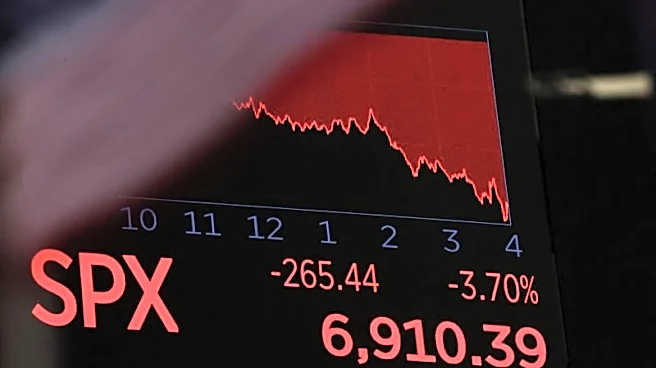
Fundstrat’s Tom Lee stated on Wednesday that he believes the cryptocurrency and equities markets are poised to bottom out soon, following a recent sharp selloff. Speaking on CNBC, Lee expressed confidence that 'we’re literally there' in terms of reaching
the market bottom, suggesting that investors who purchased stocks in recent weeks will ultimately be pleased with their decisions. He argued that the market has already reached 'max pain,' and the 'buyer strike' observed last week is concluding. Lee attributed some of the amplified volatility in the market to the increasing reliance on artificial intelligence (AI) and quantitative (quant) trading, as well as automated trading systems. He suggested that these technologies, while efficient, can exacerbate market swings and contribute to periods where investors collectively avoid buying, allowing markets to find their true levels. Wharton professor Jeremy Siegel largely concurred with the assessment of a market bottom forming, also highlighting the unprecedented AI-driven expansion in the tech sector.
Why It's Important?
Tom Lee's assertion that the market is nearing its bottom is highly significant for U.S. investors, as it suggests a potential turning point after a period of decline. If his prediction proves accurate, it could signal an opportune moment for investors to enter or increase their positions, particularly in sectors that have been oversold. His comments about 'max pain' and the end of a 'buyer strike' indicate a belief that the psychological and technical factors driving the selloff are dissipating. Furthermore, Lee's observation regarding AI and automated trading amplifying volatility highlights a critical, evolving dynamic in modern financial markets. This increased volatility, while potentially unsettling, also creates opportunities for rapid reversals, which could benefit agile investors. The agreement from Wharton professor Jeremy Siegel reinforces the credibility of this outlook, suggesting a broader consensus among some financial experts that the market's current challenges may be temporary, paving the way for recovery.
What's Next?
Investors will be closely watching market movements in the coming days and weeks to see if the anticipated bottom materializes and if a sharp reversal occurs, as Lee suggested. Key indicators will include a potential end to the 'buyer strike' and a sustained upward trend in both equities and cryptocurrency markets. The Federal Reserve's monetary policy decisions, particularly any expected quarter-point rate cuts, will also play a crucial role in shaping market sentiment and providing a more favorable backdrop. The performance of AI-driven tech companies will remain a focal point, as their continued expansion and profit margins could underpin a broader market recovery. The ongoing influence of AI and automated trading on market volatility will also be a subject of continuous analysis, as market participants adapt to these technological forces and their impact on price discovery and trading patterns.
Beyond the Headlines
Lee's comments about AI and automated trading amplifying volatility point to a deeper structural shift in how financial markets operate. The increasing sophistication of algorithmic trading means that market movements can be driven by complex, interconnected systems rather than purely human sentiment. This can lead to rapid and sometimes exaggerated price swings, creating both challenges and opportunities for investors. The concept of 'max pain' also touches upon the psychological aspect of market cycles, where investor capitulation often precedes a rebound. The confluence of advanced technology and human psychology in market behavior suggests that understanding these dynamics is becoming increasingly critical for successful investing. As AI continues to evolve, its role in financial markets will likely expand, necessitating new strategies for risk management and capital allocation, and potentially leading to a re-evaluation of traditional market analysis methods.